LyingLogix turns the pens into a lying-time map: where the herd lies, how long it stays down, and how both change through the day. The map is the product. FanPilot can read it as a secondary presence input.
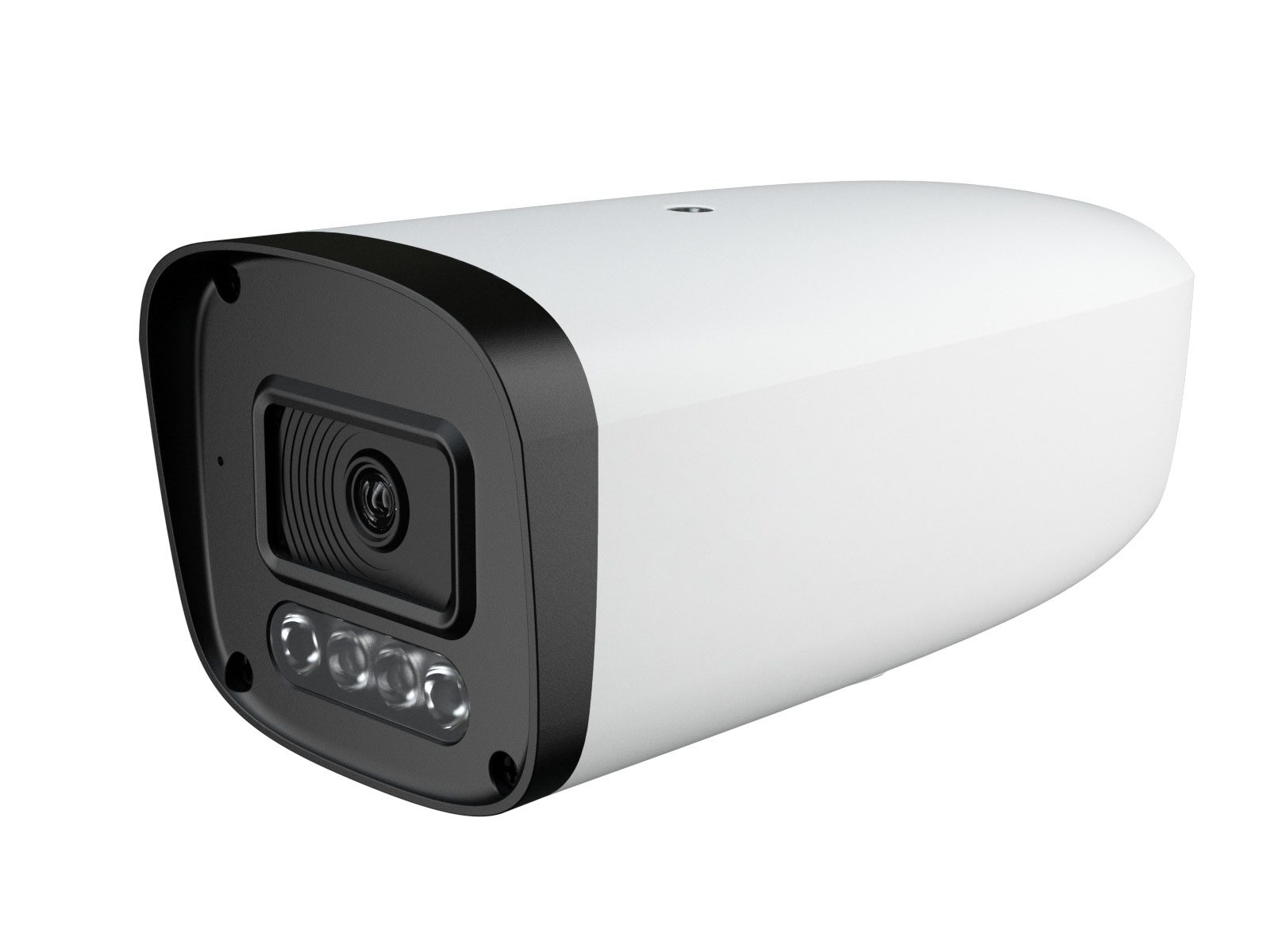
A cow that lies down for twelve hours a day is a cow that is comfortable, and comfort is the earliest signal a barn gives. LyingLogix measures it: the PoE turret cameras over the pens feed recognition models on the Mini-C Pro, and the result is a lying-time record per pen rather than an impression from a walk-through.
Three views come out of the same model. A distribution map shows where the herd is lying right now. A heat map accumulates that over 24 hours, so the cubicles that are never used and the ones that are always contested become visible as areas, not anecdotes. A lying-time curve per pen tracks the hours down through the day and against the days before it.
That is the whole product: an instrument for lying behaviour. It is aimed at the questions a herd manager already asks — is the herd lying long enough, is it lying in the right places, did last week’s bedding or fan change make a difference.
FanPilot can use the same map as an optional presence input: a fan with no cows in front of it can back off, and one with a full row can hold its speed. That is a secondary benefit, not the purpose, and it is switched on per installation.
Cubicles are the other half of it: a camera can measure a comfortable stall, it cannot make one. For how to choose and build cow-comfort cubicles — stall dimensions, bedding and its upkeep — the guidance starts at eastrock.cn, where East Rock keeps a library on exactly this.
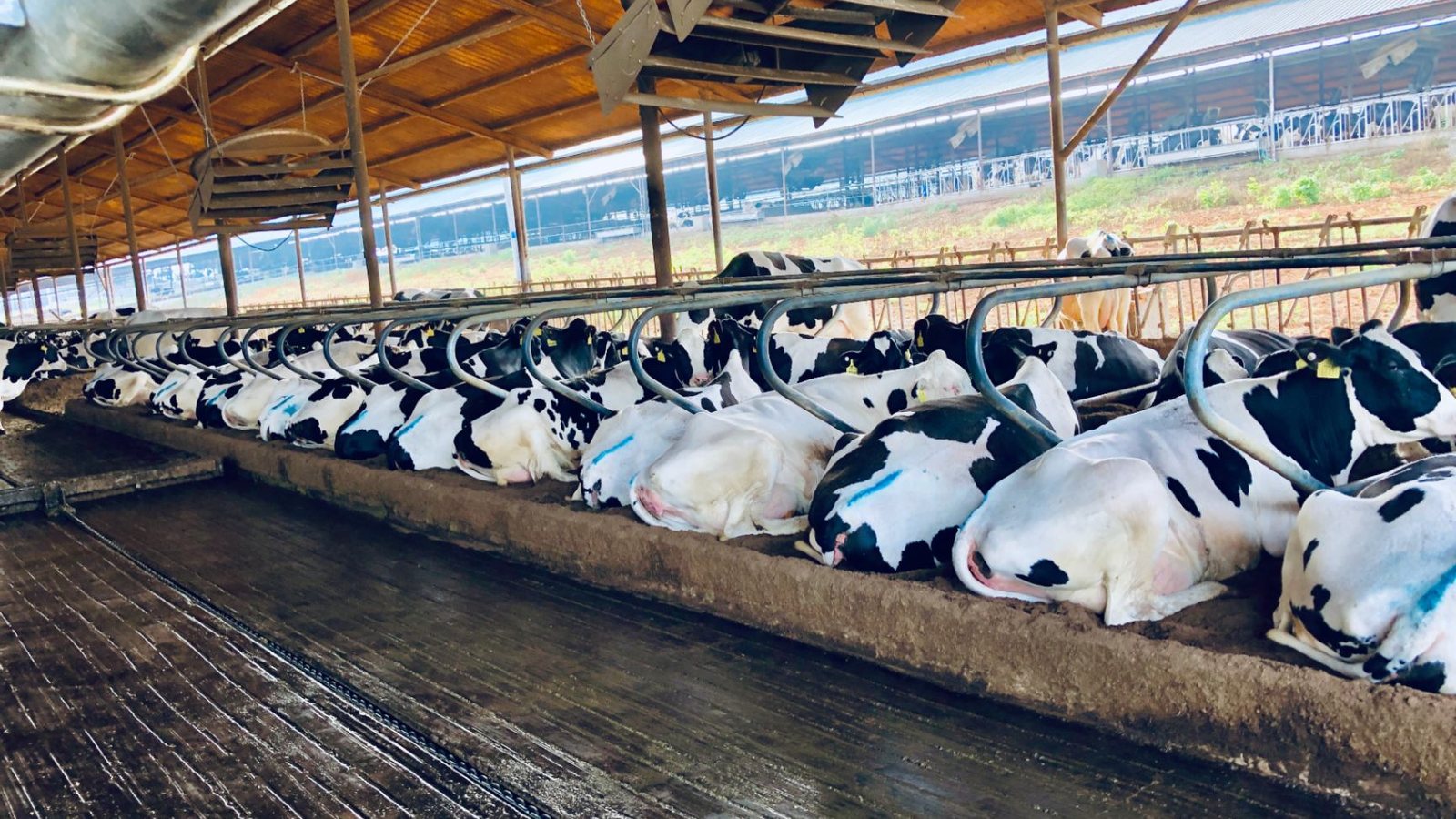
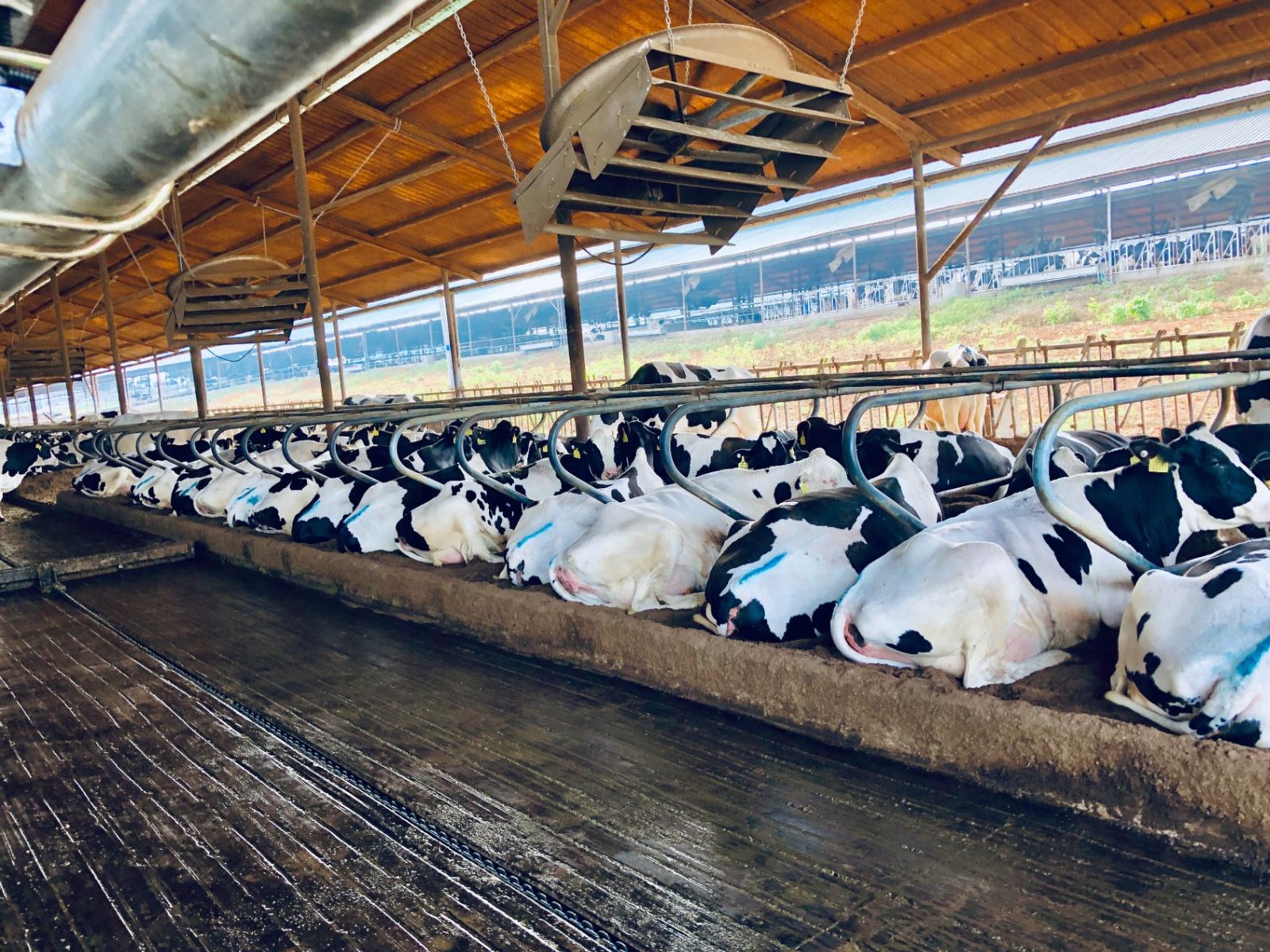
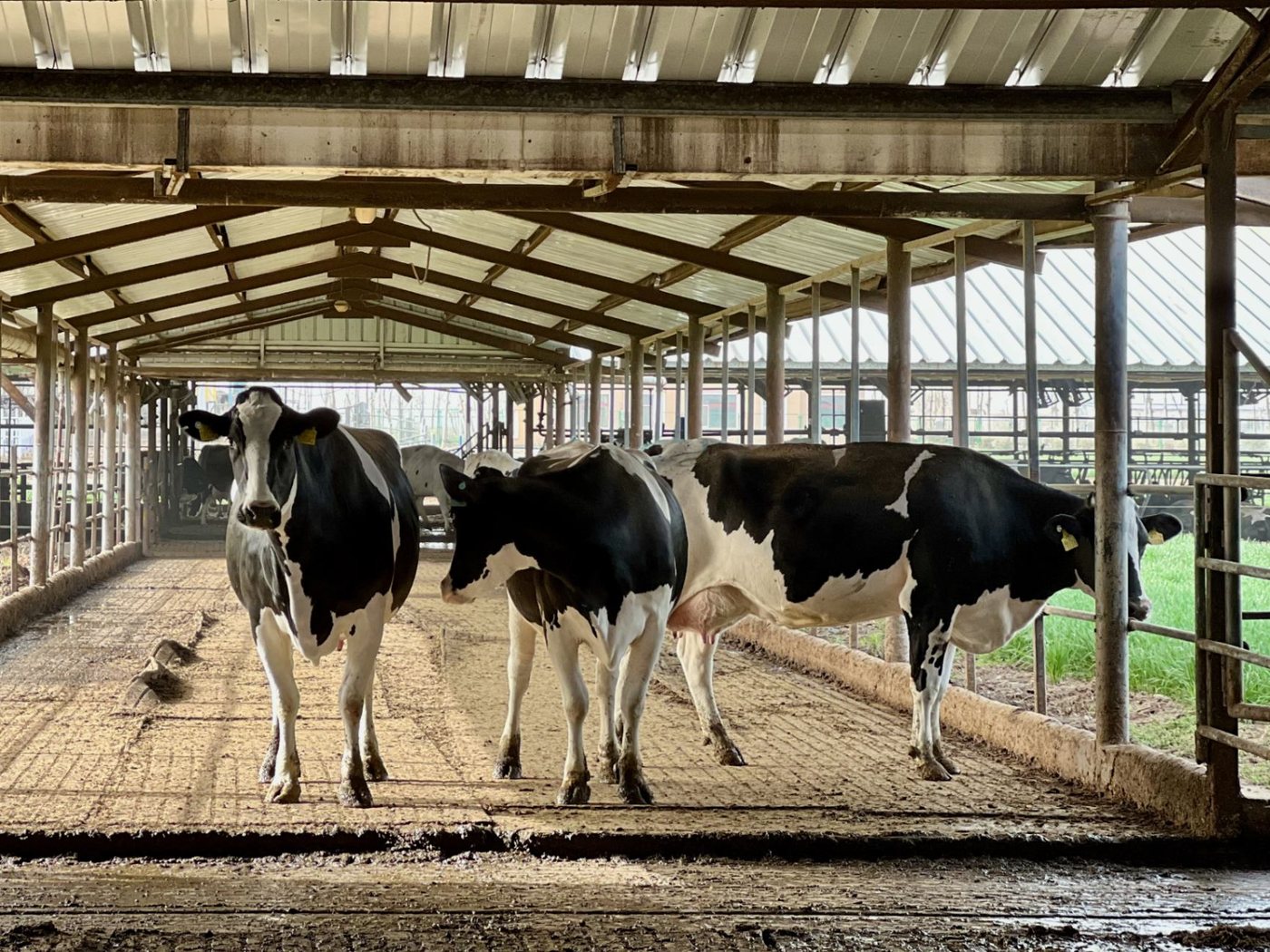
Cows down in the cubicles of a BARNEYE project. The camera above the lying area gives the same view every minute, and LyingLogix reduces it to hours down, per pen and per cubicle row.
4 MPPoE turret cameras
Per penLying time, every day
24 hHeat map window
OptionalFanPilot presence input
Equipment
What the system is made of
There is no separate vision cabinet and nothing is fitted to the cow. The layer runs on the controller that is already in the barn and the cameras that are already in the roof — which is why it is sold as an addition rather than a system.
The controller the vision layers run on. A Mini-C Pro holds the models for lying time and feed intake, and hands the results to the FanPilot and TargetSoak controllers that act on them. It is a vision node, not a second control layer: the strategy stays where it was.
Runs the vision models on site
Serves LyingLogix and NutriTrack from one unit
Reports into the platform like the rest of the line
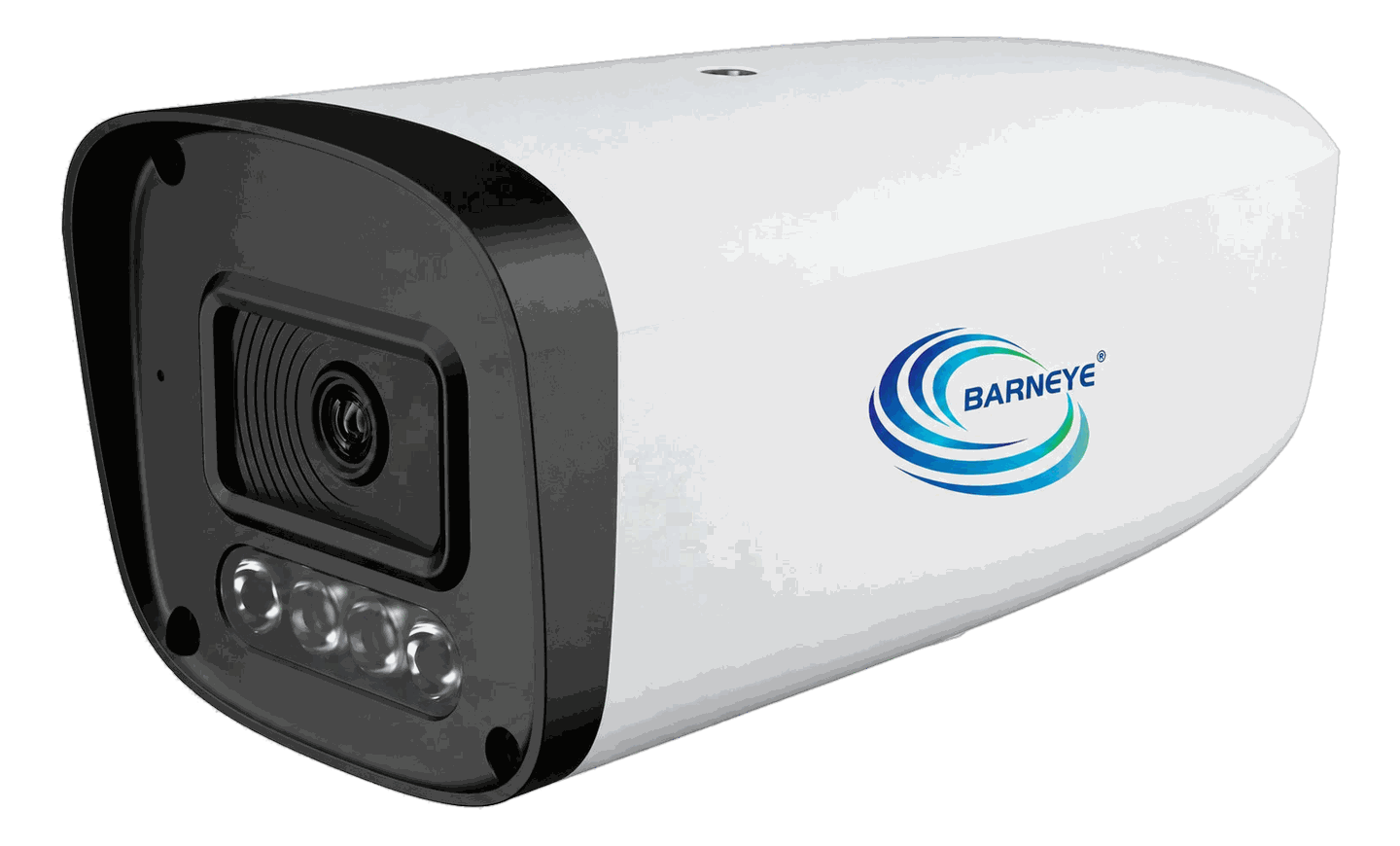
The 4 MP turret that looks down at the passage: one cable, H.265, NDAA. The same camera line covers the lying area and the feed alley, so a barn does not need a second camera system to be counted.
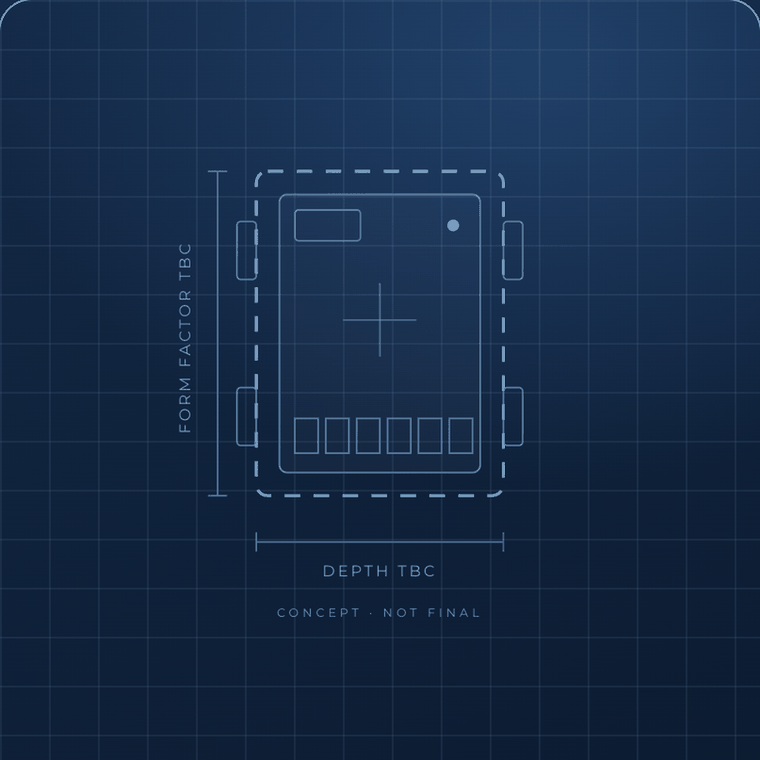
The edge enclosure that turns a camera stream into a count. Inference happens at the passage rather than in a data centre, so a dropped connection does not lose the count. Its form factor is still being confirmed.
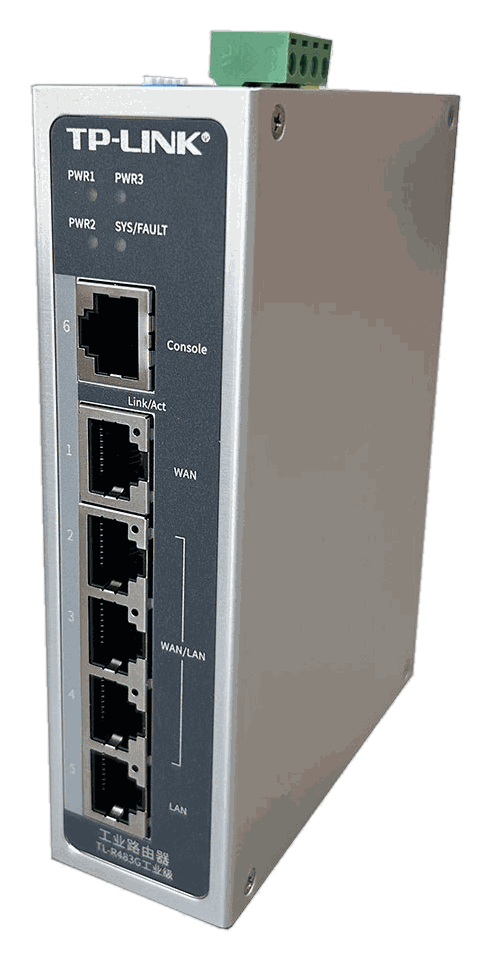
The uplink that puts the barn on the farm network. Multi-WAN and gigabit, on a DIN rail, so the platform can reach the controller and keep reaching it when one WAN drops. Without it the system still runs locally — it just stops being remote.
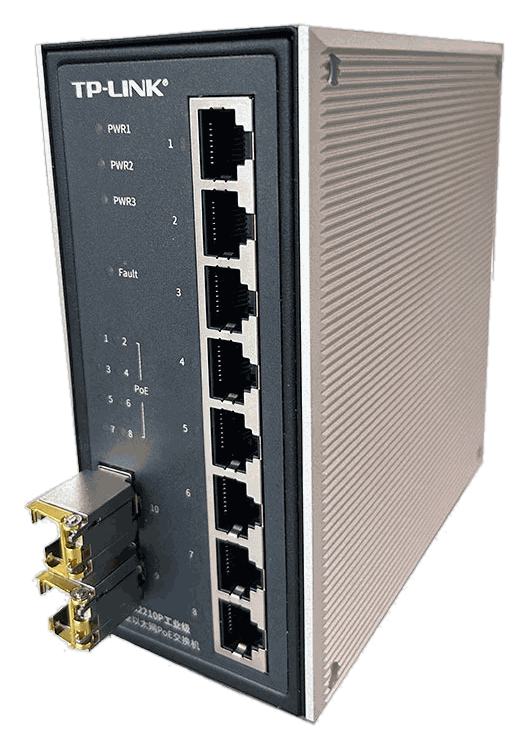
Ten ports in an industrial housing, eight of them PoE: the aggregation point for a camera run that outgrows the controller's own ports, with the power for the cameras on the same cable.
LyingLogix is not sold as a Basic / Standard / Advanced grade of its own. It is added to an existing installation, and what it reports does not change with the grade underneath it.
Where is the herd lying?A live distribution map per pen. Empty cubicle rows, crowded ones, and the alley areas cows choose when the cubicles are too warm.
Is it lying long enough?Hours down per pen, every day, against the days before. A drop shows up as a line before it shows up in milk or in a lameness check.
Should the fans know?Optionally, yes: the same map gives FanPilot a per-fan presence input. This is a secondary use, switched on per installation.
Layout
Where LyingLogix looks
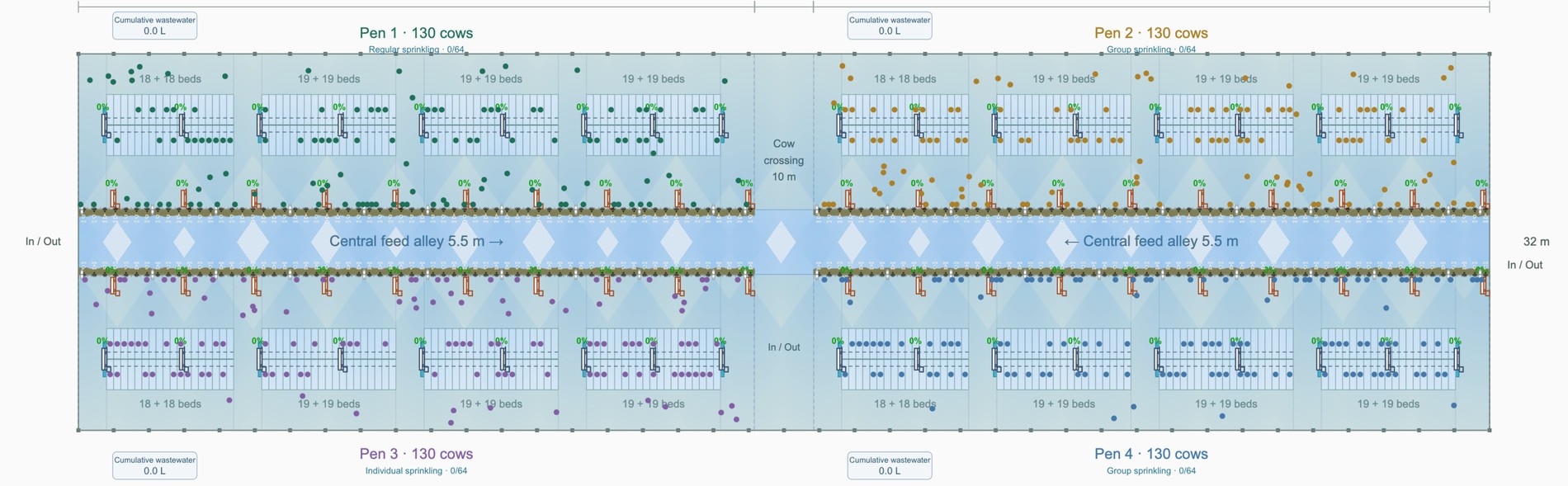
The same four-row barn, read from above instead of from the controller. Cameras look along both feed alleys; the runs gather at eight switches at the service ends and go back to one controller.
Example layoutThis drawing is an example. Its basic conditions come from Live Barn and it is not an actual dairy barn — it shows how a layout is put together and must not be used as a configuration reference for any real project.Talk to us and we will prepare a solution for your barn
88 cameras over the four-row barn, 8 PoE switches and 53 camera runs. LyingLogix reduces each pen group to hours down and a distribution map.
1
Cameras — 88 units, 44 positionsTwo units at every position on the alley side of a pen group, looking across the cubicles. The teal marks along both feed alleys are those positions.
2
PoE switches — 8Four at each service end, one per row pair. Five or six camera runs land on each of them, eleven cameras in all. The controller sits behind them, not in their place.
3
Camera runs — 5344 runs from camera to switch, four that chain one switch to the next, four back to the controller and one camera-to-camera drop. Each stays inside its own alley.
4
What it changesCubicle use, bedding changes and ventilation changes stop being judged from a morning walk. LyingLogix itself does not change a fan speed.
Why LyingLogix
Comfort you can put a number on
The layer does one thing and does it continuously: it says how long the herd is lying, and where. Four decisions get easier once that is a record.
Lying time, per pen, every day
Hours down becomes a trend rather than an impression. A pen that loses an hour a day is visible in the record long before it is visible in the bulk tank.
A heat map of the cubicles
Twenty-four hours of lying positions, accumulated. The rows nobody uses and the rows everybody fights over are areas on a map, which is the difference between a hunch and a layout change.
Uses the cameras you have
The PoE turrets that already cover the barn feed the map. Adding the layer does not mean installing a second camera system or tagging any animal.
FanPilot can read it — if you want
An optional presence input per fan footprint, so an empty row stops being ventilated like a full one. Secondary to the lying data, switched on per installation.
Optional add-on · In developmentComing soon
The head count behind the lying rate
Hours down per pen is what LyingLogix measures. A lying rate — hours down divided by the cows that could be down — needs a head count that is current, and the stocklist is not that. HerdFlow counts cows through the passage and keeps the per-pen total up to date, so the rate is divided by the cows that are actually in the pen.
Per-pen head count, refreshed as cows leave and come back
Lying time as a rate per cow, comparable between pens of different sizes
Read from a passage camera — no tag, no second controller
Send us a plan with the pen layout and the camera positions you have — or the ones you could reach. We will tell you what a lying-time record would show in the first month, and whether a fan hand-off is worth switching on in your barn.