TargetSoak · Advanced grade

A nozzle is not a group

The per-nozzle grade: a DB5 at every position, cycles that can be changed remotely, and a history of what each nozzle actually did.

The system

Individual nozzles, individual evidence

TargetSoak Advanced replaces the DB3 line with DB5 Precision Soakers, one per nozzle position, and keeps the Mini-C Plus above them. Each DB5 runs its own cycle and reports its own status, so the system stops reasoning about a feed alley and starts reasoning about a nozzle.

That resolution changes what can be tuned. A single cycle can be adjusted remotely without walking the rail, a nozzle that under-delivers shows up as a nozzle rather than as a wet patch, and operating history is held per unit — which is also how a blocked filter is found before the cows find it.

It is an upgrade, not a rebuild. Going from Standard means replacing DB3 with DB5; the Mini-C Plus, the wiring concept, the cameras and the vision recognition all stay. The two systems can still alternate with FanPilot, and the climate inputs still gate the line.

And because each nozzle now has a coverage area of its own, vision control can be applied inside that area once LyingLogix and cameras are added — the only soaking grade where the vision layer can act at nozzle resolution.

Download the TargetSoak brochureTargetSoak · Basic to Advanced · English · 2 pages · 698 KB PDF
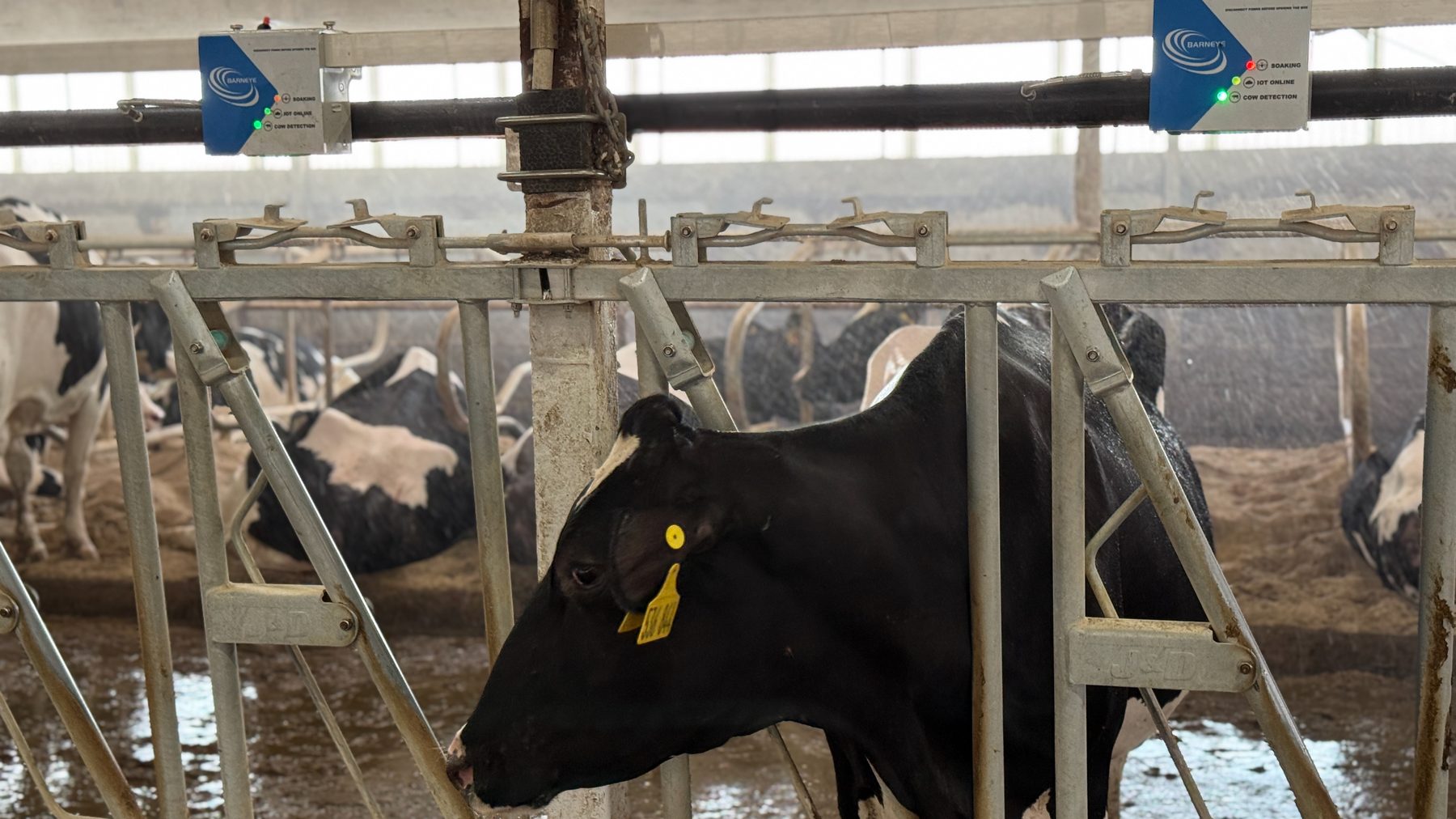
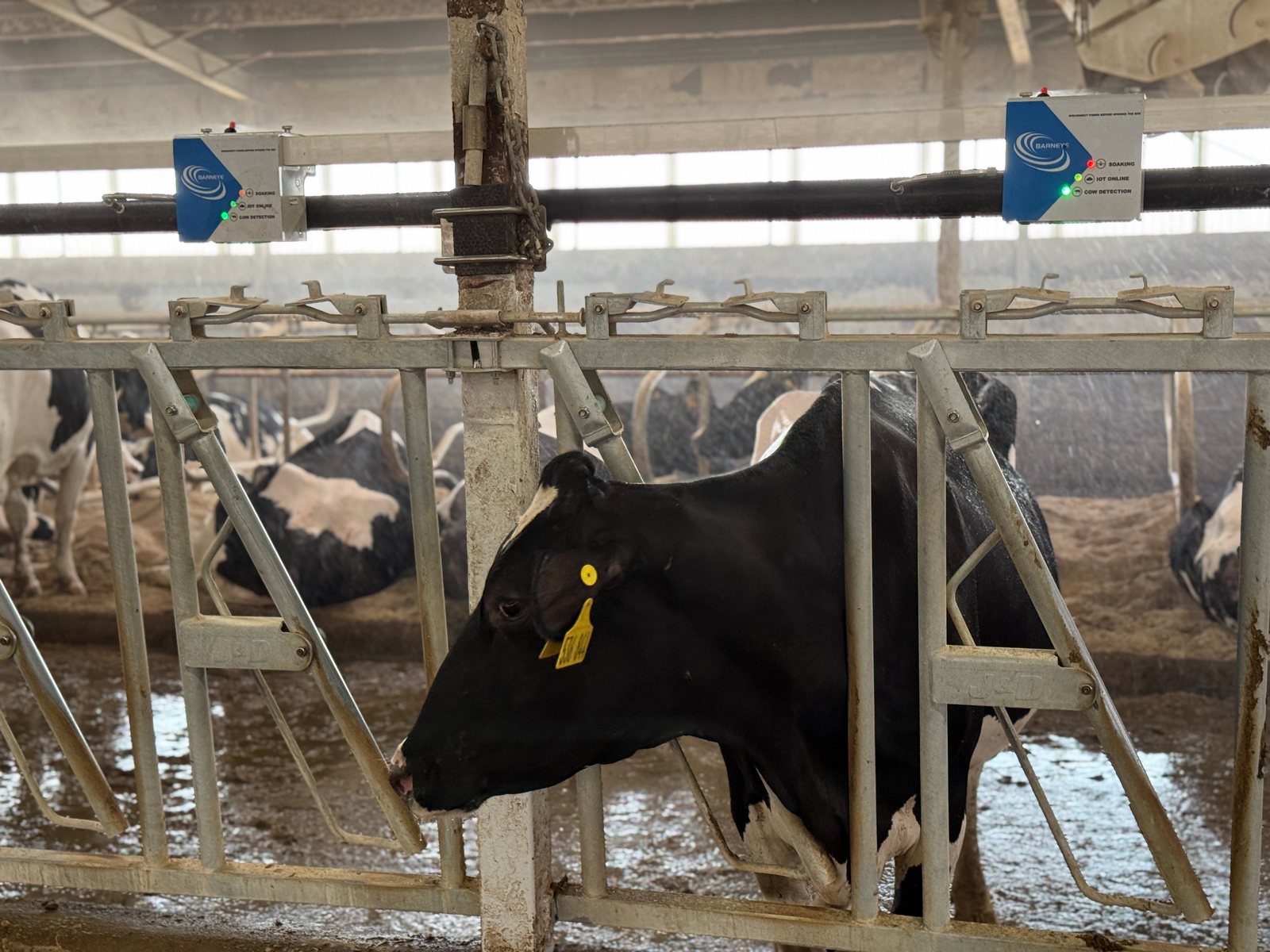
A cow eating at the feed rail with spray nozzles mounted along the rail above
Nozzles along a feed rail. At Advanced every nozzle position is a device with its own cycle, status and history.
  • 1:1Nozzles per DB5
  • RemoteCycle adjustment
  • Per unitStatus and history
  • 60 %+Less water than timed soaking
Equipment

What the system is made of

The controller and the rail stay. The field units change from one DB3 per 1.5 m to one DB5 per nozzle, which is where the extra resolution comes from.

ECU-01-006-000One per barn

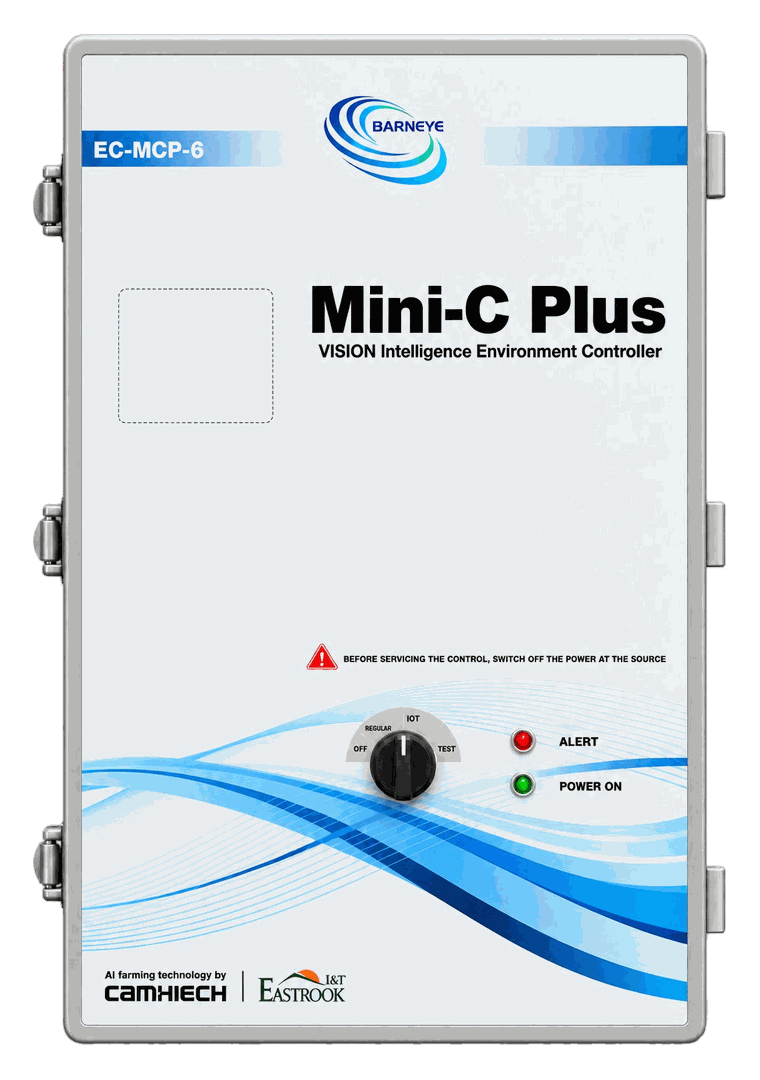
Mini-C Plus

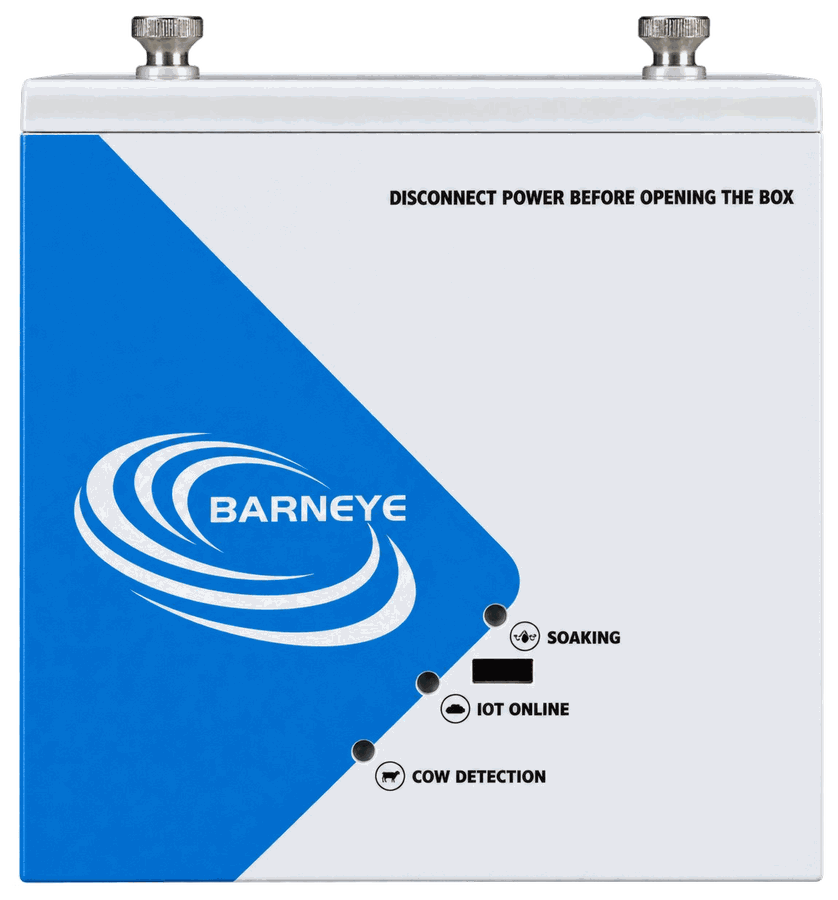
The controller at the centre of this grade. It holds the ventilation strategy for every zone, reads the environmental inputs and coordinates the fan groups. Six module slots take the VFD module and whichever input modules the barn needs.

  • Ventilation strategy for every zone in one enclosure
  • Six module slots for control, acquisition and communication modules
  • Built-in temperature and humidity, with THI calculated on board
  • Platform link for remote setting and multi-farm management
Open the Mini-C Plus
CCM-01-001-002One per Mini-C Plus

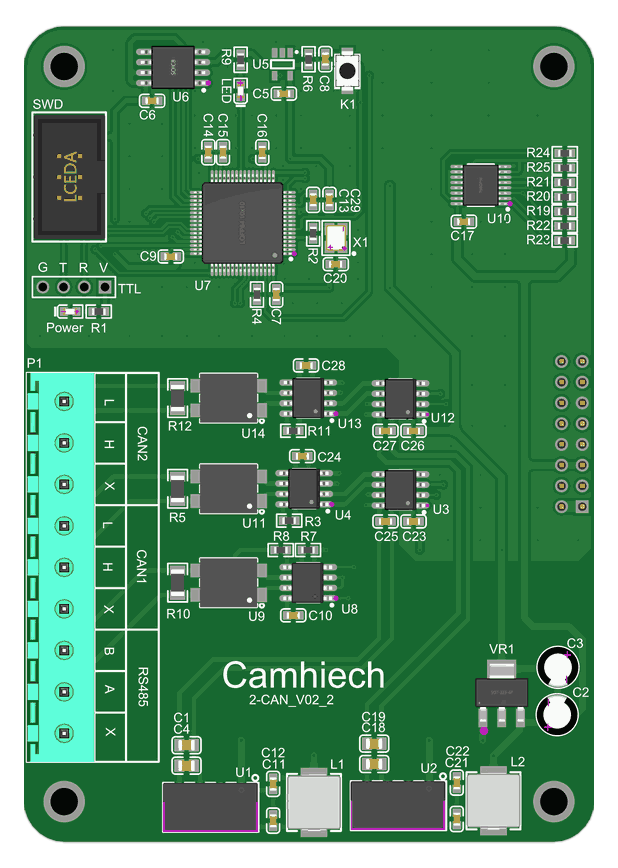
CAN module

The plug-in board that puts the controller on a CAN bus — two lines out, for the terminals that take their commands over CAN rather than over Modbus or a 0–10 V pair. At this grade it is what gives each DB terminal its own channel back to the controller.

  • Two CAN lines from one module
  • Seats in a Mini-C Plus module slot
  • Carries the command channel for the DB terminals
See the module slots
CTU-01-003-004One per nozzle position

DB5 Precision Soaker

Each DB5 runs its own soaking cycle and reports its own status and operating history. Where a DB3 works as a node on a circuit, a DB5 works as a device: commanded on its own, read on its own, and recorded on its own.

  • Independent cycle per nozzle
  • Two-way operating data and history
  • Cycle adjustable remotely, nozzle by nozzle
  • Vision-ready for coverage-area control
Open the DB5
per projectSupplied as required

Environmental sensors

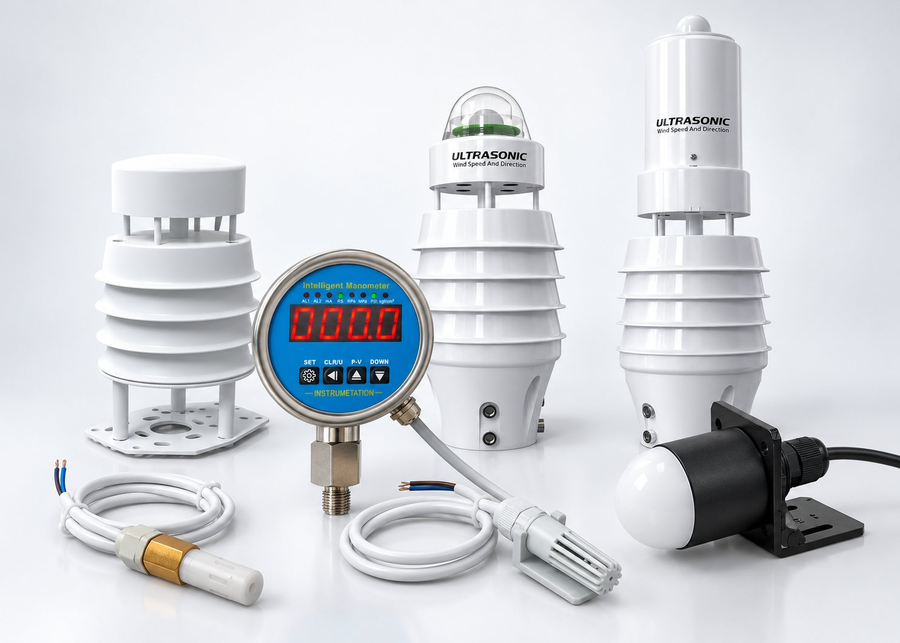
Temperature, humidity, THI, light, indoor/outdoor pressure difference, water pressure — and whatever else the barn needs through the module slots. Sensors are supplied as required: the controller can run on its built-in readings alone, or on several external inputs at once, and a single strategy can weigh more than one at a time.

  • Built-in temperature and humidity, THI calculated on board
  • Additional sensors for light, pressure difference and water pressure
  • Modbus RTU over RS-485, up to 2,000 m
  • Inputs combined into one zone strategy
Open the sensors
COM-01-003-004One per barn network · DIN rail

Industrial router

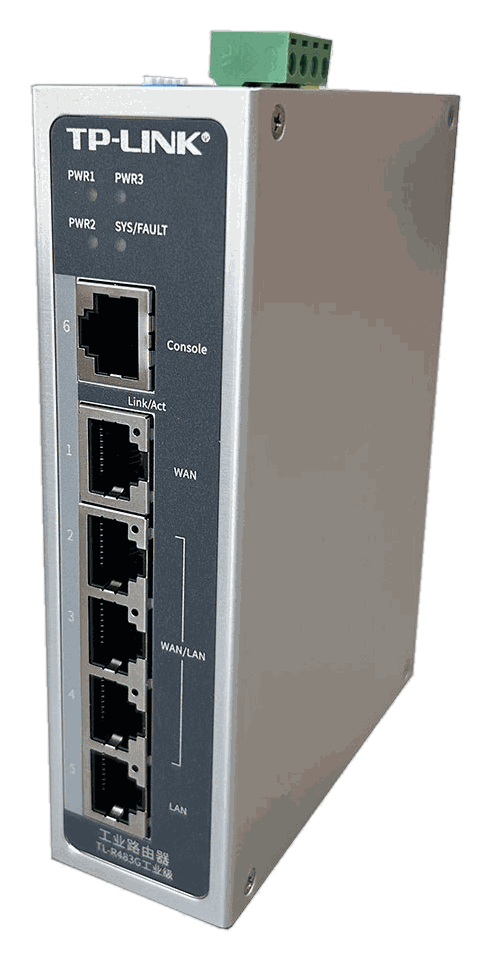
The uplink that puts the barn on the farm network. Multi-WAN and gigabit, on a DIN rail, so the platform can reach the controller and keep reaching it when one WAN drops. Without it the system still runs locally — it just stops being remote.

  • Multi-WAN gigabit uplink
  • DIN rail, barn cabinet
  • Keeps the platform link up across a dropped WAN
Open the industrial router
Grade ladder

Where this grade sits

The upgrade from Standard is a field-unit swap, not a rebuild. Everything above the rail stays, and everything that was learned about the barn stays with it.

  1. Basic —
    DB7 + DB3
    A DB7 cabinet with a local strategy, and a DB3 line that opens on cow presence.
  2. Standard —
    Mini-C Plus + VSO + DB3
    The strategy moves to the platform, the climate inputs and the fans enter the decision, and the DB7 cabinet becomes a module slot.
  3. Advanced —
    replace DB3 with DB5
    One device per nozzle, cycles adjustable remotely, status and history per unit. This is the grade described on this page.
AI

What the AI does at this grade

Learning from its own history, and from the animals — with the panel always able to take over.

At this grade every nozzle reports back, so the system keeps a per-nozzle record of what it asked for and what actually happened. It reads that history and moves the strategy itself — cycles and weights shift without anyone editing a schedule.

Presence and intake data from LyingLogix and NutriTrack enter the same loop, so soaking is driven by what the animals are doing, not only by the clock. Every adjustment is logged, and any of them can be taken over by hand from the panel.

Layout

Where TargetSoak Advanced sits in the barn

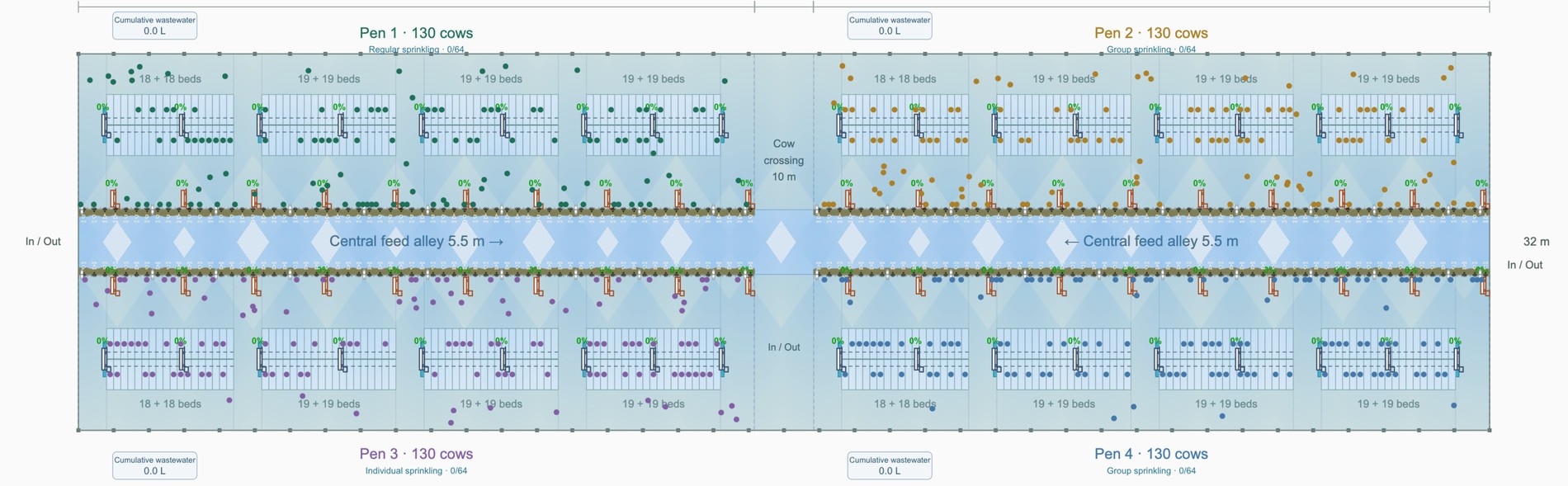
The same two feed alleys, drawn per nozzle: every position on the rail is a DB5 with its own address, so the line can be run in sections rather than as one circuit.

Example layoutThis drawing is an example. Its basic conditions come from Live Barn and it is not an actual dairy barn — it shows how a layout is put together and must not be used as a configuration reference for any real project.Talk to us and we will prepare a solution for your barn

256 nozzle positions along both feed driveways, each with its own DB5, plus the 18 power drops that feed them. Nothing moves — the soakers stay where they were.

  1. 1
    One DB5 per nozzle — 256The modules sit where the DB3s sat, on the same rail and the same spacing. Each carries its own cycle, status and history.
  2. 2
    Spray runs — 257 dropsOne more run than Standard: the sections are cut finer, so a stretch of rail can be adjusted without touching the rest of the alley.
  3. 3
    Power drops — 18The darker runs at the service end and along the crossing feed the modules. They are drawn separately from the spray line because they carry supply, not a command.
  4. 4
    Individual cycles, changed remotelyA cycle is edited in the platform rather than with a keypad at the rail. Per-nozzle tuning is what this grade is bought for.
Why TargetSoak Advanced

One nozzle at a time

Four things become possible once a nozzle is a device rather than a position on a circuit — and every one of them is about being able to prove what happened.

Per-nozzle command and strategy

A nozzle at the end of the line can run a different cycle from the one in the middle, and be switched off during service without taking the whole alley out.

Status and operating history per unit

Every DB5 reports what it did. Under-delivery, a blocked nozzle or a valve that stays open shows up as a device, not as a guess.

Remote cycle adjustment

Individual soaking cycles can be changed from the platform. No ladder against the rail, no keypad in the dark, no site visit for a timing change.

A path into vision control

With LyingLogix and cameras, each nozzle can be controlled inside its own coverage area — the only soaking grade where the vision layer can act at nozzle resolution.

Upgrading a soaking line?

Tell us how many nozzles the alleys carry and what is on the rail today. We will come back with the DB5 count, the swap sequence so the barn keeps soaking through the change, and what per-nozzle history would let you prove afterwards.

Send us your nozzle count
DB5 count per alley
DB3 to DB5 swap plan
Per-nozzle reporting