Soaking · Client project
Intelligent Radar Soaking in Tropical Desert Climates
A desert site grows its own feed, makes its own water and cannot afford to spray empty air. Radar plus vision across 17 barns cut spraying water by 62 % and lifted yield per cow by 19.2 %.
- 62%less spraying water
- 19.2%more milk per cow
- 99.7%failure-free uptime
The situation
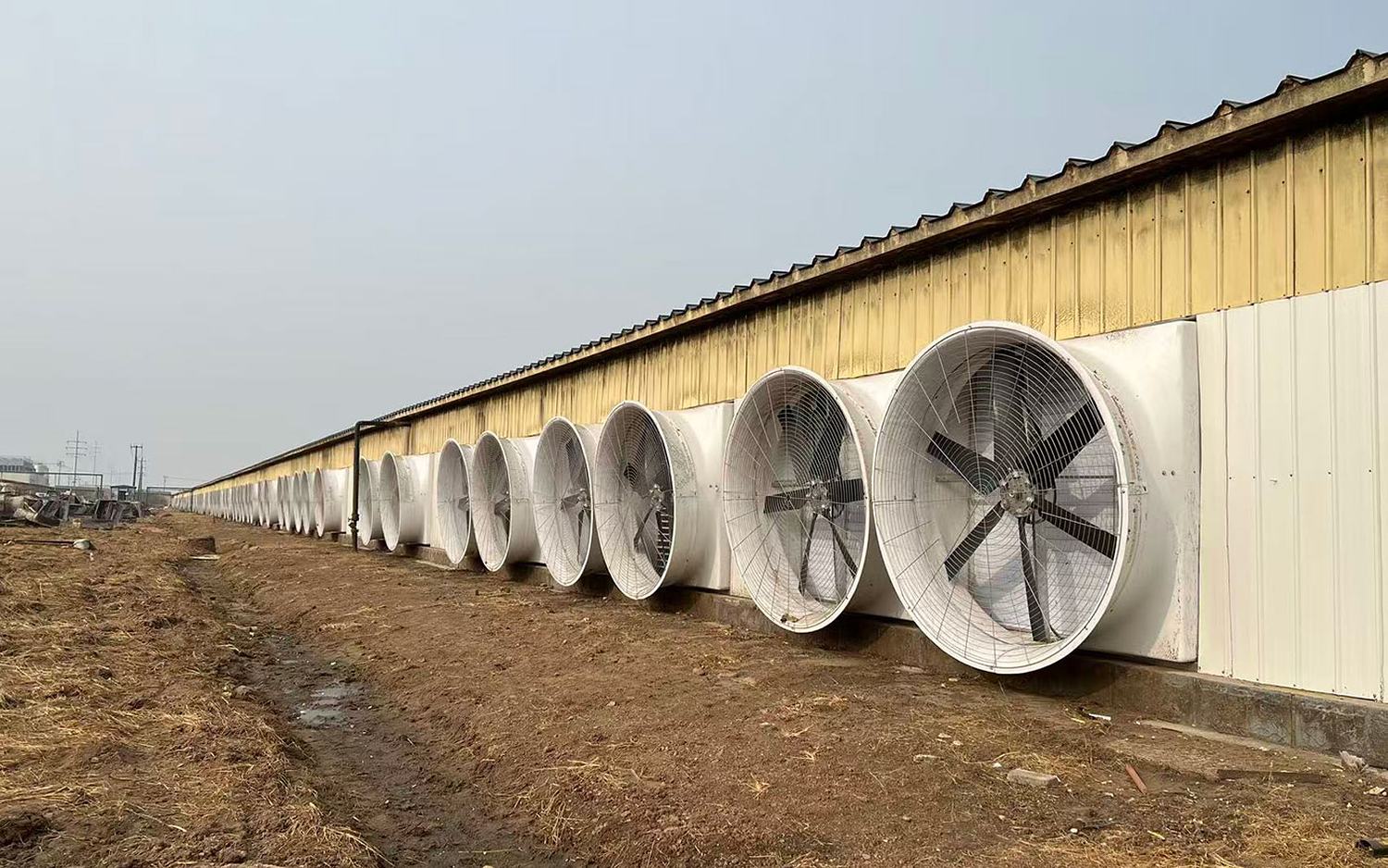
The project is a 2.4 million m² desert dairy base holding 24,000 cows. Summer temperature reaches 50 °C, rainfall is under 100 mm a year and every litre of water is desalinated and paid for.
- Heat, then lost milk. Timed spraying could not hold heat stress down; summer yield on lactating cows fell by up to 20 %.
- Water at a price. Continuous spraying spent desalinated water on empty concrete and pushed wash-water treatment up with it.
- Infrared blinded by dust. Earlier sensing read vehicles and staff as cows and missed cows standing at the feed face, so the logic was never in step with the barn.
- Salt. Spray water is reverse-osmosis permeate, and the chloride load eats ordinary hardware.
- Distance. With the site this large, inspection by walking could not keep up with anything that went wrong.
What we built
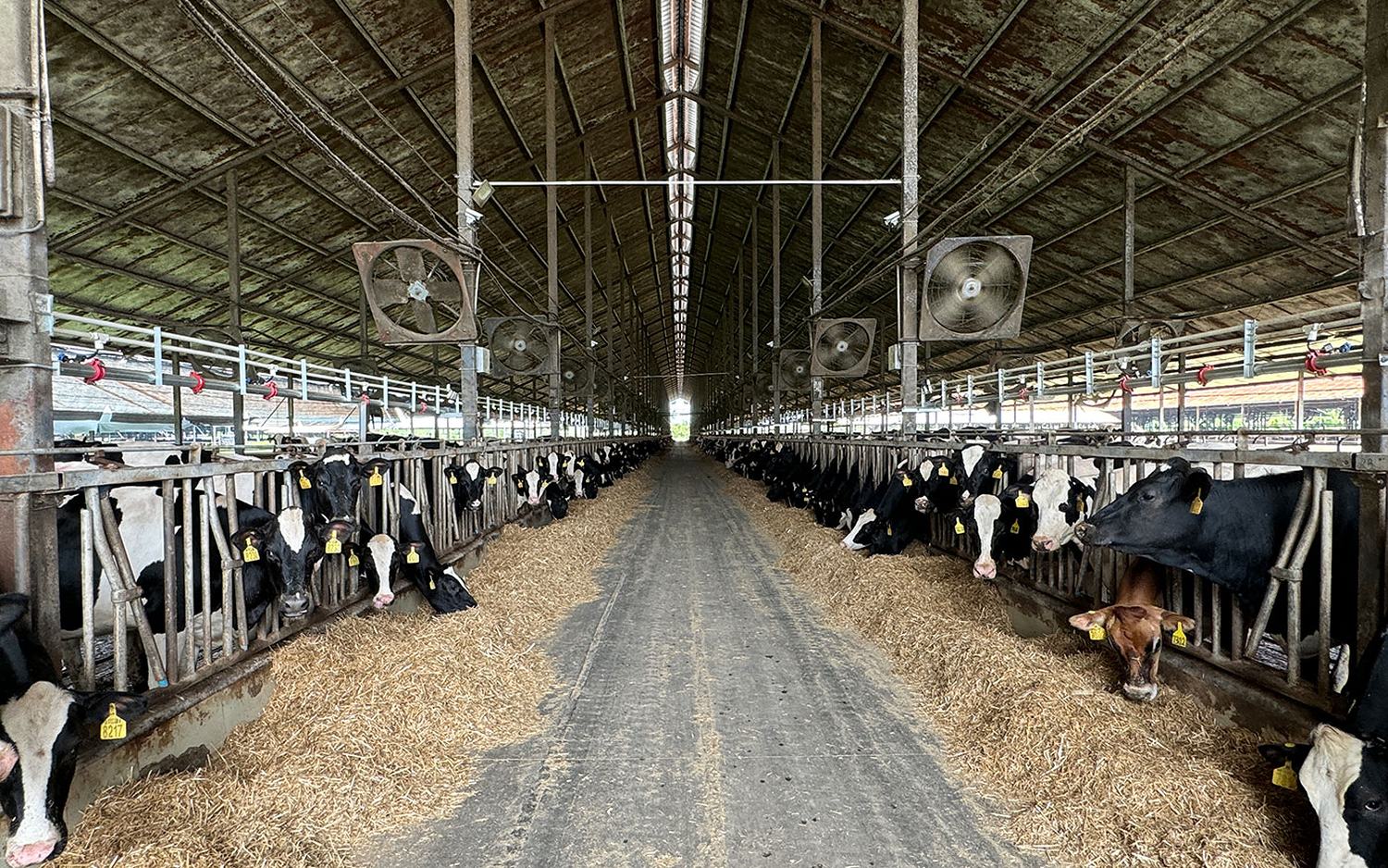
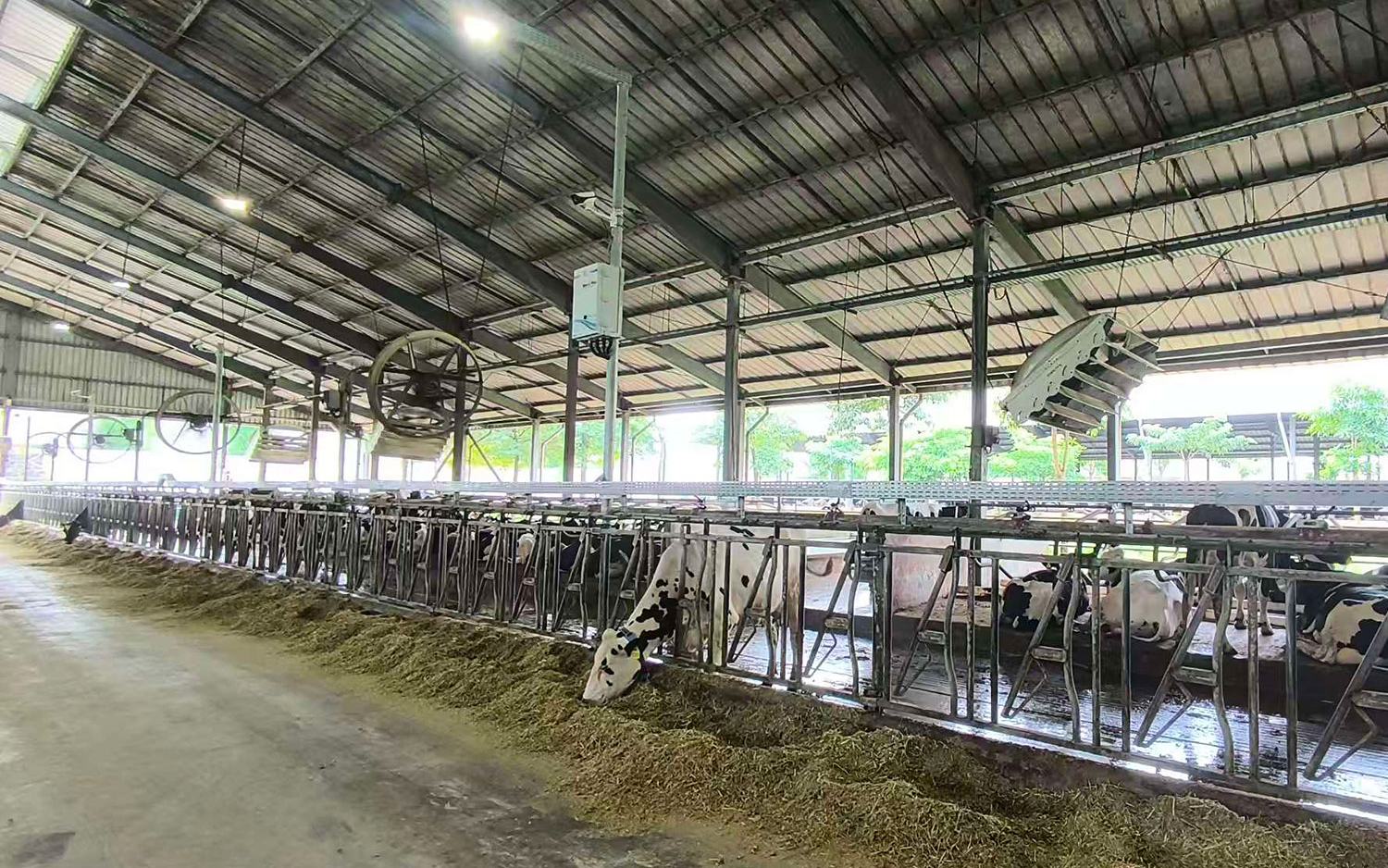
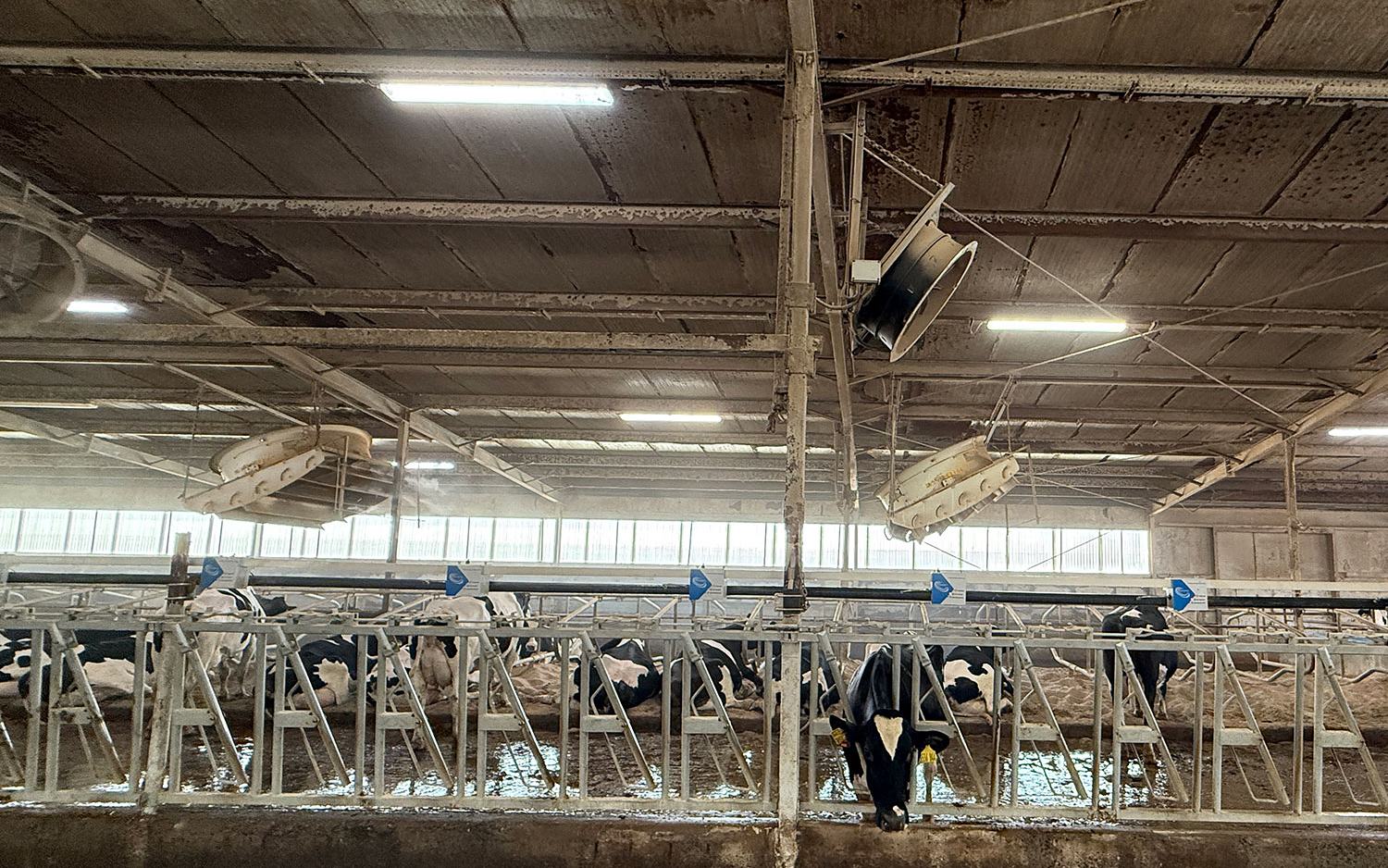
A Min-C Plus environmental control host and DB5 radar controllers now run 5,000-odd spray points across 17 barns, covering the site end to end.
- Radar, not just vision. Each DB5 carries a Doppler sensor that reads through heat and dust. Radar and camera vote together, so a person walking the lane no longer starts a spray run.
- Spray follows the cow. A valve opens when she enters its zone and closes when she leaves, which removes the empty spraying that used to dominate the water bill.
- Two layers of control. Local logic runs spraying, fans and high pressure fogging on THI — start at 72, stop below 68 — and keeps running when the network is down. The cloud layer is for strategy, not survival.
- Built for salt. IP67 housings, 304 stainless brackets and an ABS shell rated for permeate spray.
- Modular. Plug-and-play units, so a failed part is a swap rather than a shut-down.
What it delivered
| Measure | What changed | Result |
|---|---|---|
| Water | No spraying over empty concrete | 62 % less spraying water — over 160,000 m³ of desalinated water a year |
| Heat stress | Cooling arrives before yield does not | 19.2 % more milk per cow; summer loss down from 20 % to under 3 % |
| Uptime | Control that holds in a desert | 99.7 % failure-free operation; manual adjustment down 70 % |
| Management | The farm is visible from one screen | Inspection time down 45 %; response to an alarm 80 % faster |
| Feed | Ration tuned to what is actually eaten | Leftover feed down 31 %, worth more than 2M USD a year |
We finally do not have to spend a lot of precious fresh water just to cool cows. Before, we sprayed on time whether cows were there or not. Now we spray when there are cows, and the radar is more accurate than our own judgement.
Why it holds up
- Redundant sensing. Radar and vision together, because a desert barn defeats any single sensor.
- Local autonomy. The barn stays controlled when the link does not.
- Material choices. The enclosure is specified for the water on site, not for a catalogue environment.
- Scale. Seventeen barns and five thousand points are one system, not seventeen projects.