Intelligent Negative Pressure Fan Control
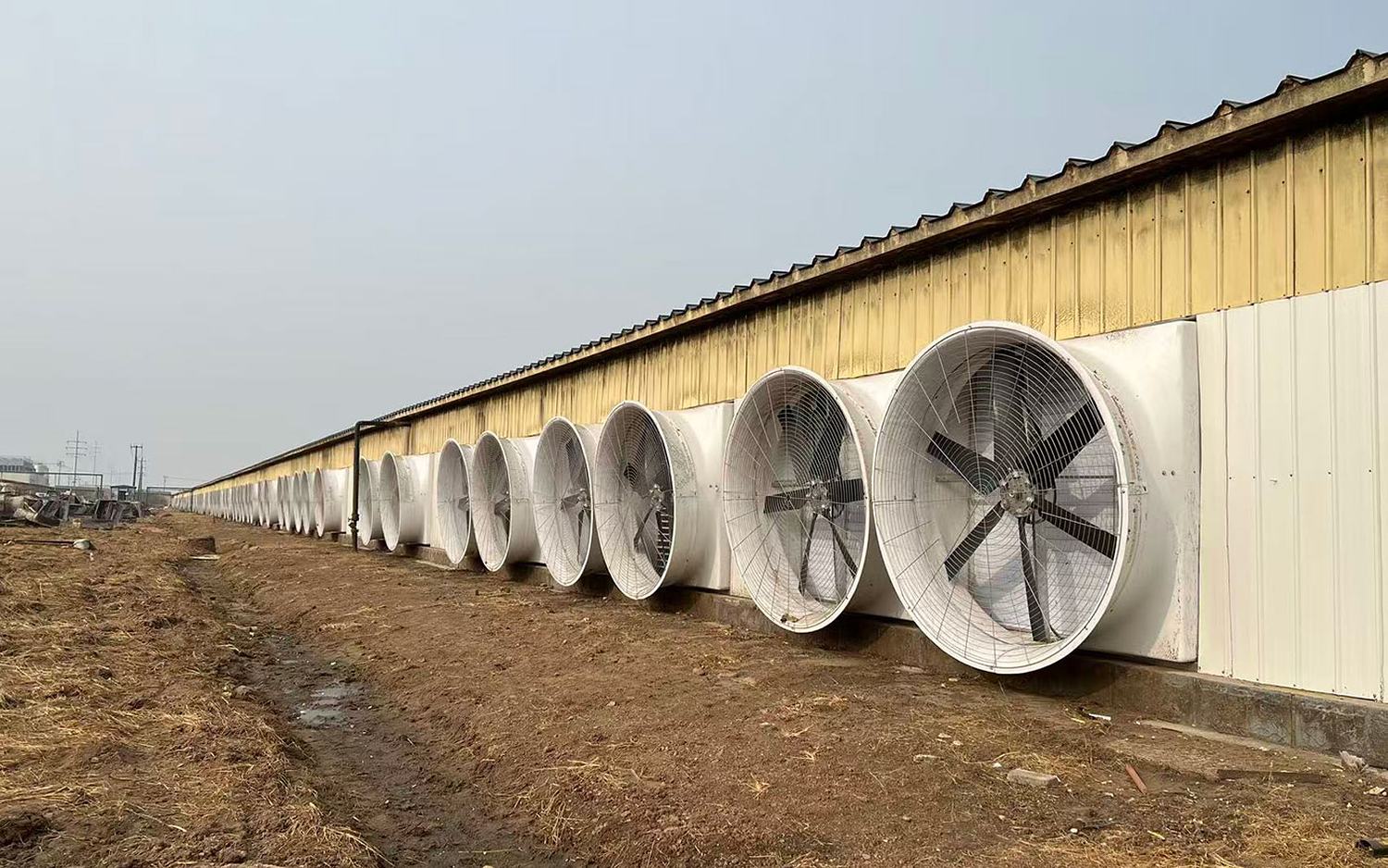
A 40,000-head project ran its barns on LPCV with a single row of 50-inch fans at the end wall. Through the humid months the design ran out of margin, so we rebuilt the fan line, instrumented the barn and gave the setpoint to an algorithm.
- 22%faster air speed
- 1 / minair changes at peak
- 80%fewer on-site checks
The situation
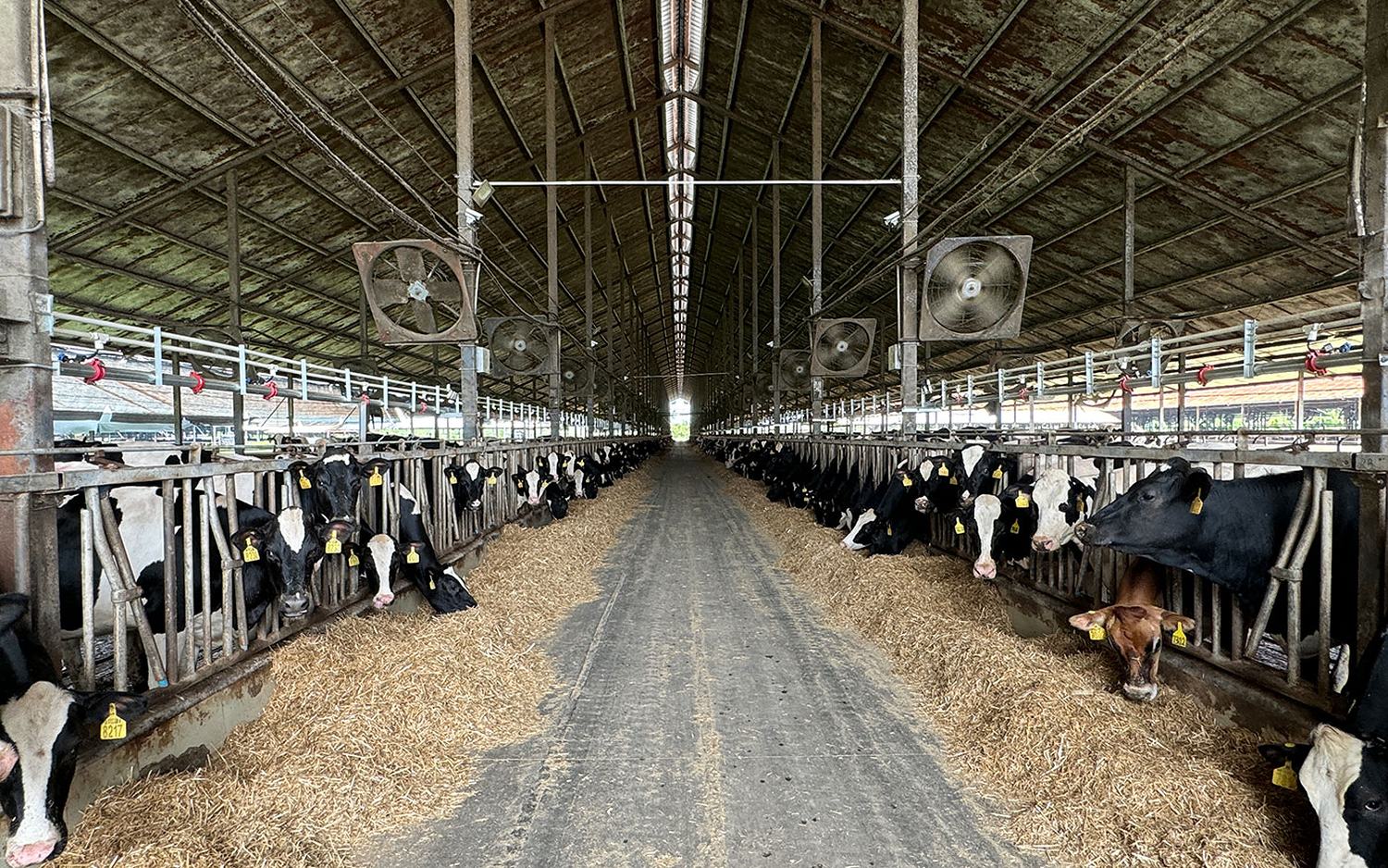
The barns use LPCV — longitudinal pressure cross ventilation — with exhaust fans at the end wall. For most of the year that is efficient. In the humid season it was not: inlet speed fell away, relative humidity sat above 90 % for weeks and the temperature-humidity index stayed above 83. Cows stood instead of lying down, feed intake dropped and milk followed it.
The original 50-inch fans could not move enough air to close the gap, and on/off control meant the barn ran at full power or at nothing.
What we changed
- Fan line replaced. The 50-inch units came out and 84-inch high-flow negative pressure fans went in, raising ventilation capacity without adding fan positions.
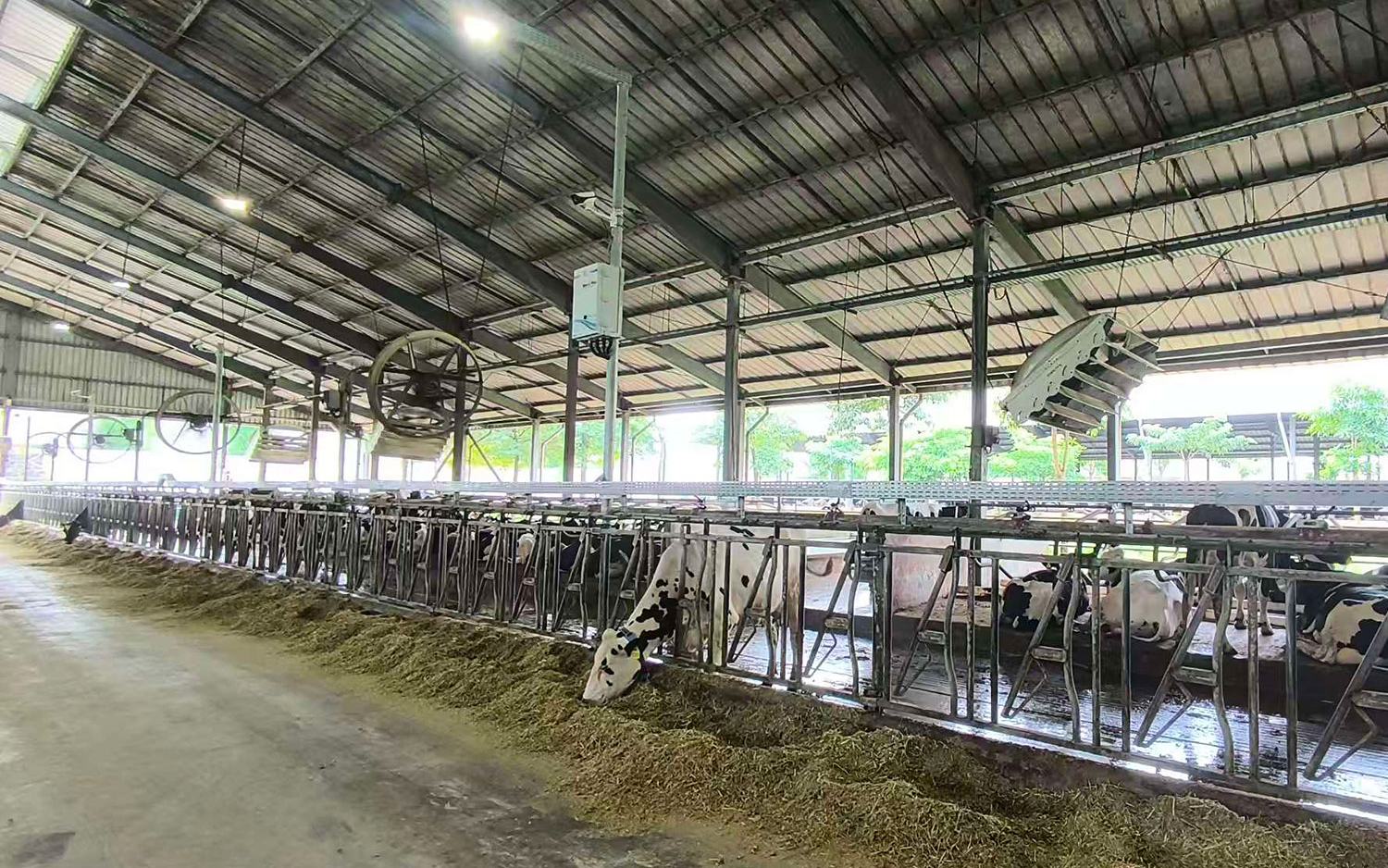
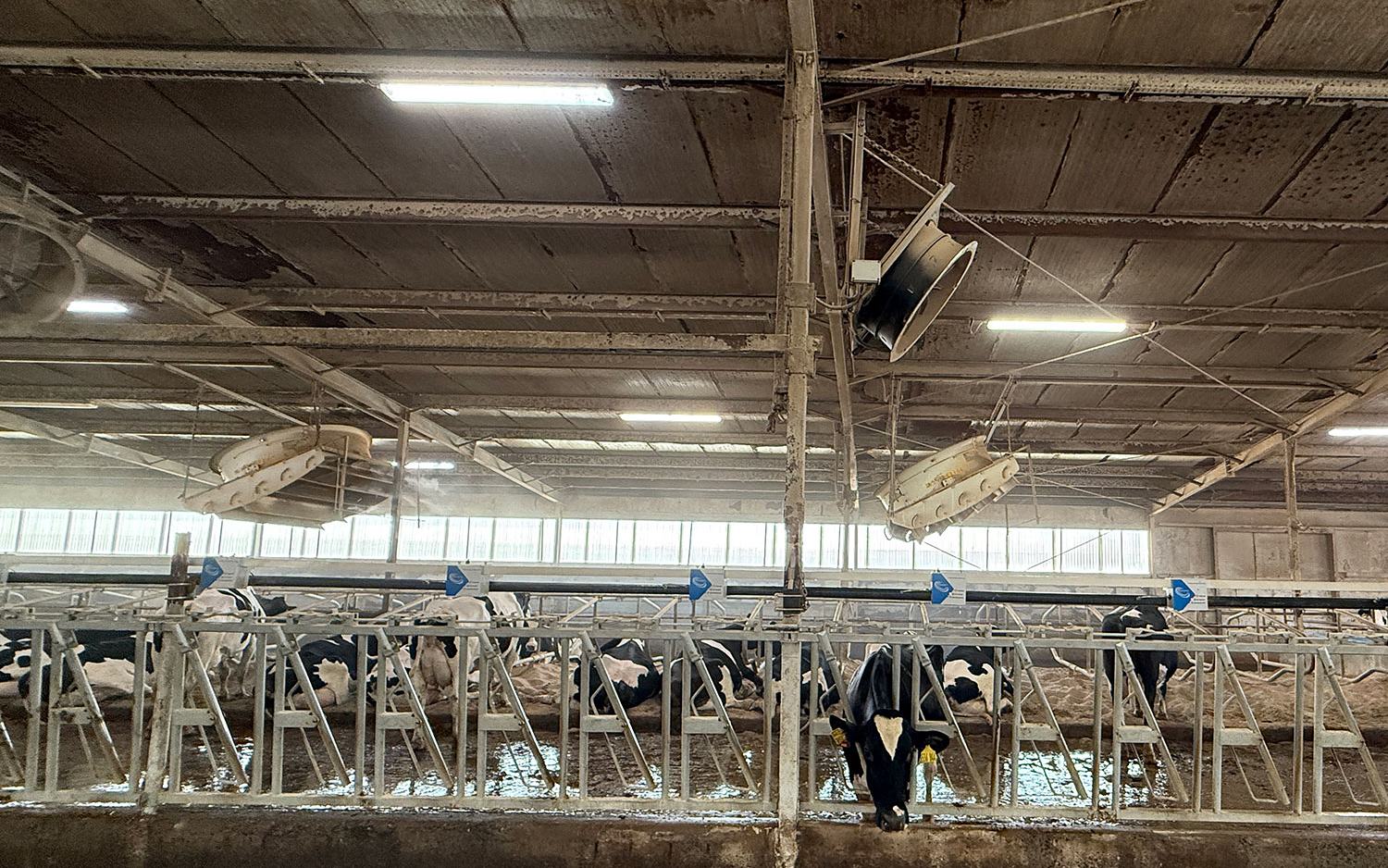
- Sensing added. Temperature and humidity sensors, a static-pressure gauge, an anemometer and an air-quality probe were installed in the barn, all wired to DB2 control terminals.
- Variable speed. Every fan got a variable frequency drive, so speed is stepless instead of on/off.
- Setpoint handed to the algorithm. The controller now sets negative pressure and airflow from time of day and season, and holds an even air speed across the barn with no dead corners.
What it delivered
The barn moved from fixed-stage ventilation to environment control. Every target in the commissioning plan was met.
| Measure | What changed | Result |
|---|---|---|
| Air exchange | Higher inlet speed across the barn | Air speed up to 22 % higher; one full air change per minute reached |
| Heat stress | Cooling without manual intervention | THI held in the comfortable band through the hot season |
| Light and air | More even distribution | Brighter, more uniform natural light under the roof |
| Remote operation | Fewer trips to the barn | On-site inspection frequency down more than 80 % |
| Production | Steady intake and yield | Milk performance up; disease control cost down |
The system took our LPCV barn from passive ventilation to managed environment. We run it from a phone and a PC, check status and change setpoints without walking the barn, and the management workload has roughly halved.
Why it holds up
- Precision. The algorithm re-reads the barn as conditions move, so the environment sits at target rather than near it.
- Reliability. Sensing and control are instrumented end to end, which keeps the system stable through a wide swing in outside weather.
- Economic value. Better intake and yield, plus lower disease and management cost, pay the retrofit back quickly.
- Simplicity. Remote monitoring removes most of the walking, which is what a barn this size actually costs to run.