Soaking · Client project
Soaking Upgrade for Tropical High-Temp Farms
Year-round heat, a grid that sags, and a barn that could not be rebuilt. The system had to cool on its own, cut water use and survive humidity, dust and voltage swings without touching the existing layout.
- 60%less water
- 99%milk quality pass rate
- 50%lower labour cost
The situation
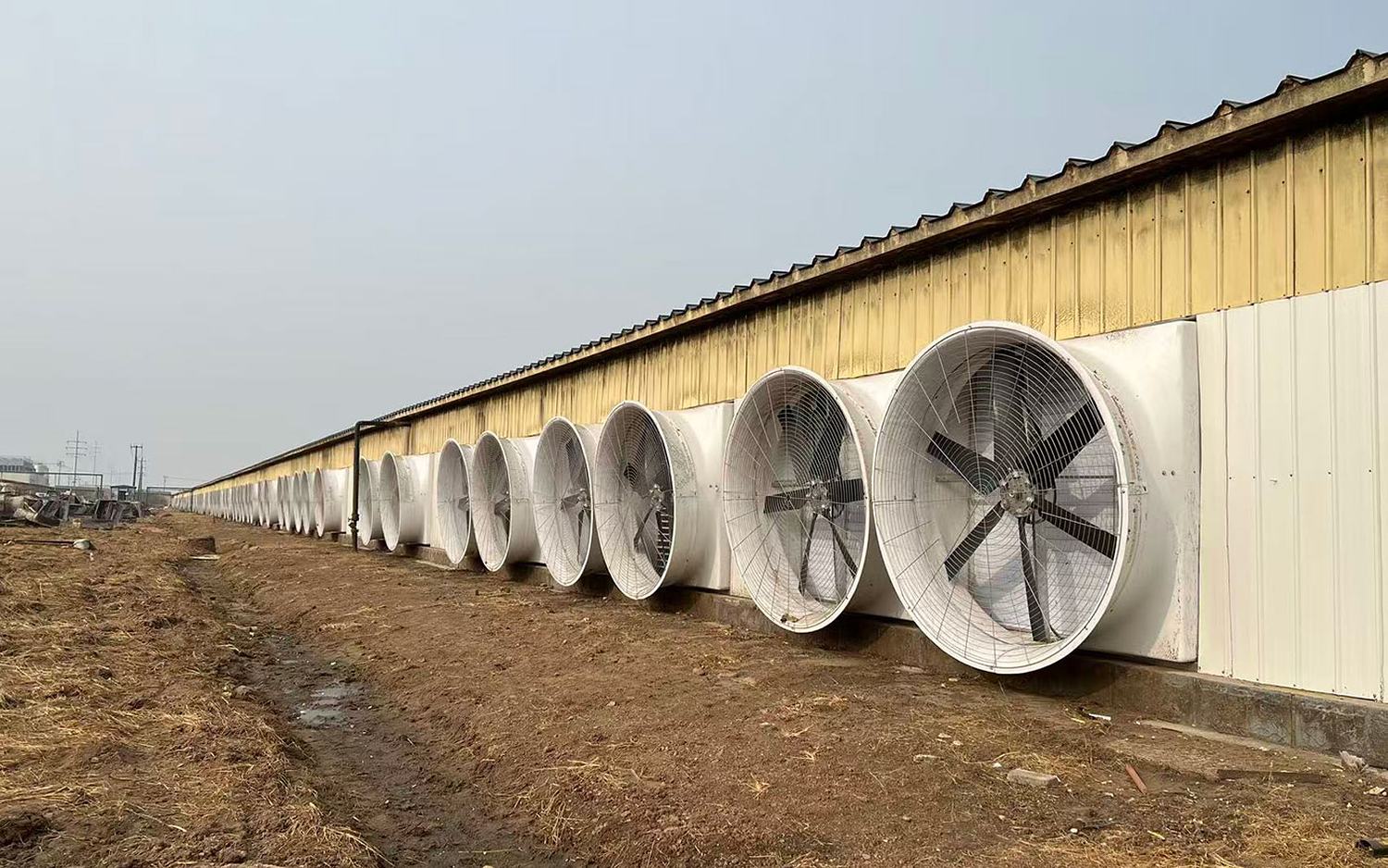
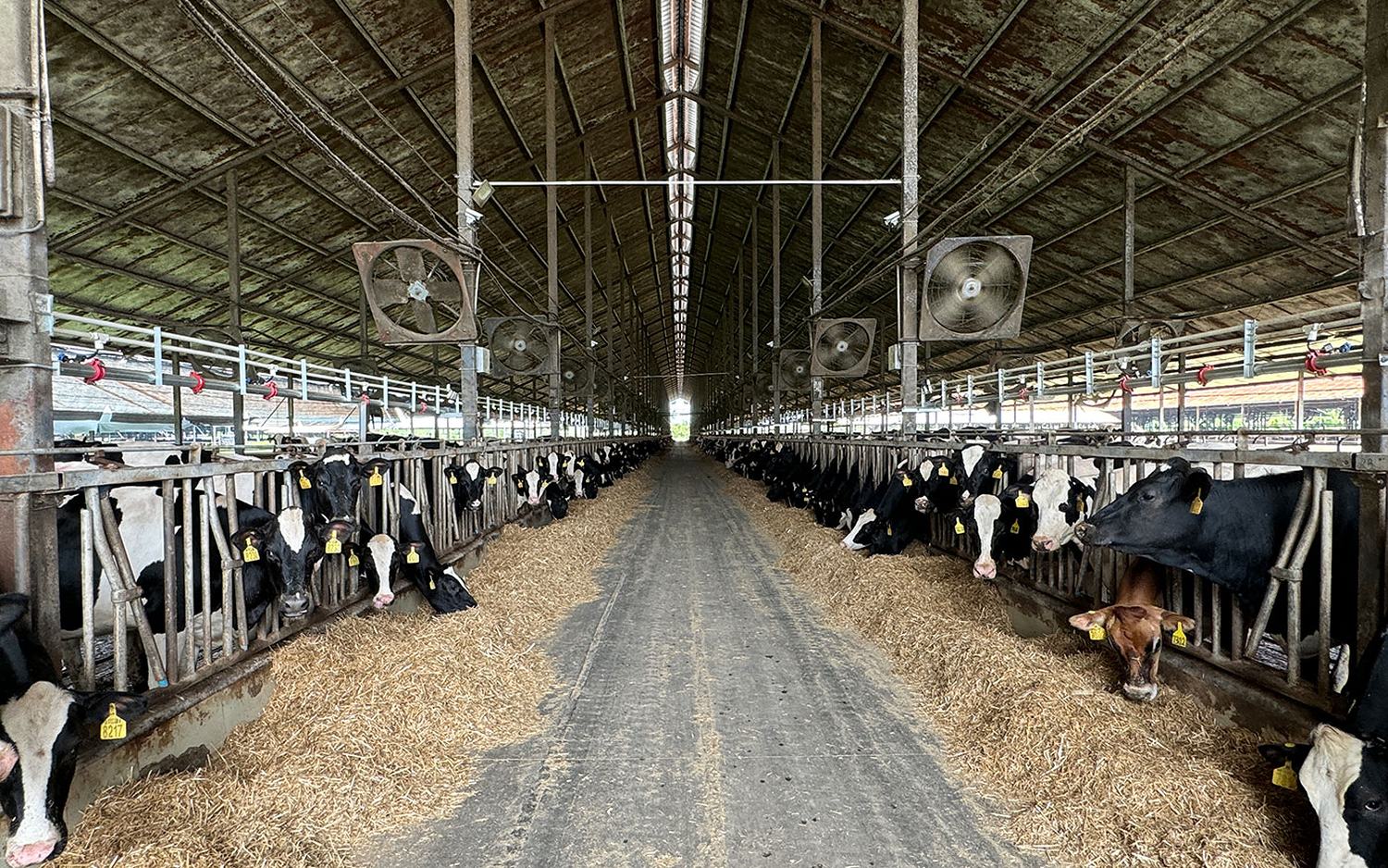
The project sits in a tropical climate with a high annual average temperature and a long, wet season. The barn had been cooled with manual and timed spraying, which is cheap to install and expensive to run.
- Rigid equipment. Spraying ran to a clock rather than to temperature, humidity and the cows, so it wasted water, over-wetted the barn and could not be coordinated with the fans.
- Lost performance. Heat stress cut intake, cut yield and pulled milk quality indicators down, which is where the loss actually shows.
- Labour. Every adjustment needed a person. Across a site this size that is a standing cost, and failures were found late.
- Environment. The outdoor installation is hot, humid and dusty, and the supply is not clean — equipment has to be built for that, and the upgrade had to fit the buildings already standing.
What we built
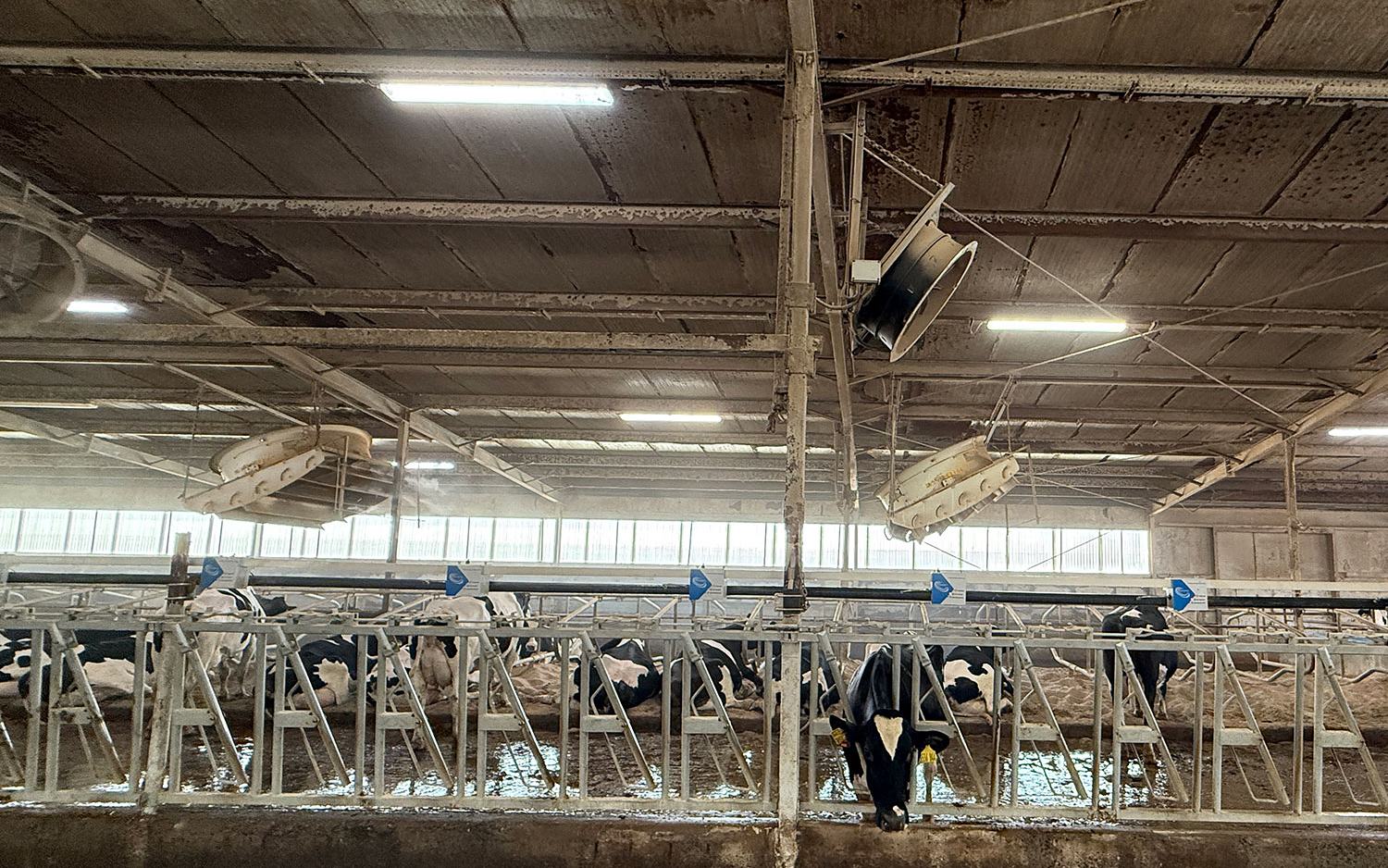
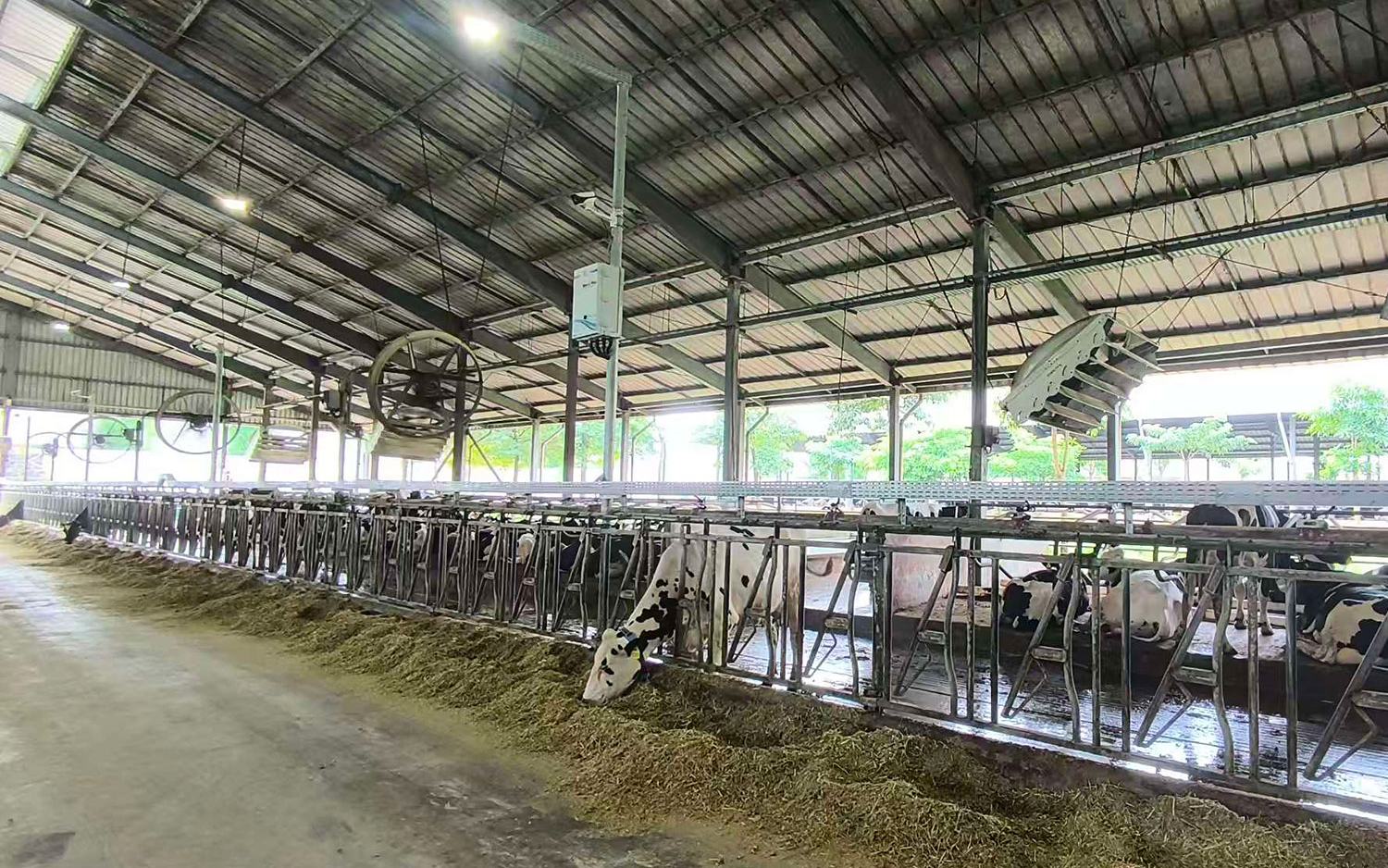
- Hardware that suits the climate. Distributed temperature and humidity sensors read the barn around the clock and compute THI on site. The enclosures are sealed against water and dust, and each spray line runs through a VSO control module with VFD-driven fans.
- Control that runs itself. Spraying and fans start together when THI crosses the heat-stress threshold; duration, interval and fan speed are adjusted as the day moves. A humidity ceiling stops the barn from being cooled into a wet barn.
- Fitted to what was there. No structural rebuild: the system was mounted to the existing layout and commissioned on site, with an expansion port left open for the site’s wider management platform.
What it delivered
| Measure | What changed | Result |
|---|---|---|
| Heat stress | Cooling no longer waits for a person | Intake and yield recovered; raw milk compliance above 99 % |
| Water and power | Spraying only when it is needed | Water use down more than 60 %, with lower fan power draw |
| Labour | The barn runs unmanned | Labour and operating cost down more than 50 %; morbidity and culling down |
| Environment | Built for heat, humidity and dust | Long runs with a very low failure rate on a site with an unstable supply |
| Digital step | A platform, not a timer | The site now has a baseline it can extend to its next barns |
The heat problem our barn had carried for years is gone. We do not stand next to a control box any more, water and power costs fell, and the cows are producing again. The install fitted our existing layout and never stopped production.
Why it holds up
- Customised adaptation. The configuration follows the climate and the buildings, not the other way round.
- Full-link intelligence. Sensing, decision and actuation sit in one loop, so “on demand” is a property of the system rather than a setting.
- Industrial-grade reliability. Hardware rated for heat, humidity and an unstable supply, which is the normal condition on this kind of site.
- Service reach. Deployment, commissioning and maintenance are handled for projects outside China, in the local time zone.